- Written by Kyle Fletcher
- Published on October 1, 2026

Picking a fence style for your Denver home is harder than it looks on a Tuesday afternoon browsing photos online. What works beautifully on a craftsman bungalow near the city core can look out of place on a stucco home in a newer master-planned community, and that mismatch gets noticed. After more than 20+ years of Denver residential fencing work across the metro, Andrew-Thomas Contractors has seen what holds up, what gets rejected by HOA review boards, and what wears out faster than homeowners expect.
We’ve also watched neighborhoods change along with fence styles. This firsthand perspective shapes every recommendation we make. This guide walks through Denver’s major neighborhood types, the fence styles that tend to fit each one, and the Colorado-specific material factors that matter regardless of where you live.
Matching Fencing Styles to Your Denver Property
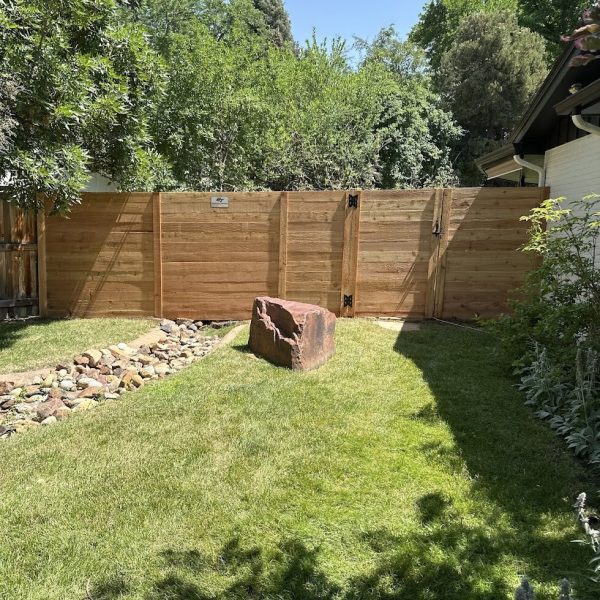
The right fence depends on your neighborhood’s architectural character, your lot size, and Denver’s zoning height limits (typically 4 ft in the front yard and 6 ft in the backyard in standard residential zones). HOA design standards apply in many communities and often go beyond city rules. Material choices also need to account for Colorado’s UV intensity, freeze-thaw cycles, and seasonal wind. No single style fits every Denver property.
Why Denver Neighborhoods Don’t All Want the Same Fence
Denver Metro is architecturally diverse in a way that surprises people who move here from less varied cities. Within a 20-minute drive, you’ll pass 1920s craftsman bungalows, mid-century ranch homes on standard lots with alleys, newer planned subdivisions with consistent stucco profiles, and larger suburban properties on the edge of the metro where the lots open up considerably.
A fence that reads as historically appropriate in an older urban neighborhood can look mismatched in a community where every home was built to the same HOA-approved palette. The reverse is equally true: a vinyl privacy fence that fits perfectly in a newer Highlands Ranch subdivision would look wrong behind a brick Victorian. Context matters as much as personal preference, and that’s not something you can fully appreciate from a product catalog.
We’ve been working on Denver residential fencing projects since 2006, and the team has watched those neighborhoods evolve in real time. This guide organizes the Denver Metro area into broad character types rather than inventing rules for specific communities, because neighborhood design norms shift over time and HOA requirements vary significantly even within a single zip code.
If you’d like help confirming what fits your specific property, request a free estimate and we’ll walk the site with you.
Historic and Older Urban Neighborhoods: Character-Matched Styles
Older Denver neighborhoods with pre-1970 housing stock, including craftsman bungalows, Victorian-era homes, brick row houses, and Tudor revivals found in areas like older Arvada, Wheat Ridge, and established inner-ring Denver communities, present a specific design challenge. The architecture has strong character, and a fence that ignores it tends to stand out in the wrong way.
For front yards in these neighborhoods, ornamental wrought iron fencing is often the most historically appropriate choice. It’s open, architectural, and reads as an intentional design decision rather than an afterthought. In the backyard, wood privacy fencing in cedar is the standard, with picket heights and cap styles chosen to echo the home’s trim lines. Many of these properties sit on standard city lots with alleys, so gate placement on the alley side and gate hardware that holds up under daily use matter more than homeowners sometimes anticipate.
Denver’s general fencing height limits in standard residential zones are 4 ft for front yards and 6 ft for backyards, but specific parcels and zoning designations can vary. Always confirm with Denver’s zoning office or permit department for your address before installation begins.
Why Wrought Iron Works Well on Older Denver Homes
The vertical line profile of wrought iron complements the architectural details of older Denver homes without competing with them. It maintains street visibility, which matters on the denser urban blocks where these homes tend to cluster, and it signals that the property has been maintained with some attention to its original character.
From a material standpoint, powder-coated steel and iron handle Colorado’s UV exposure and temperature swings well in exposed front-yard positions. Wood painted in a front-yard application tends to fade and check faster at Denver’s altitude, especially on south-facing fence faces that take direct afternoon sun. Wrought iron gates can also be fitted with hardware designed for frequent use, which is worth thinking about if you have kids or dogs moving in and out of the yard regularly.

Classic Residential Suburbs: Privacy Fencing That Fits the Block
The broad mid-tier suburban belt built from the 1950s through the 1990s makes up the largest share of Denver Metro housing. Communities like Lakewood, Englewood, Westminster, Thornton, and Northglenn are full of ranch and split-level homes on standard lots, many without HOA governance or with minimal HOA restrictions. In these neighborhoods, backyard privacy is the dominant goal, and the fence is as much a functional boundary as an aesthetic statement.
Cedar is the traditional choice for privacy fencing in these areas, and it performs reasonably well in Colorado when properly sealed and maintained. Wood fencing offers a warm, natural appearance and can be stained to match trim colors or neighborhood preferences. The key caveat is that Denver’s semi-arid conditions and high-altitude UV exposure dry out and fade untreated cedar faster than homeowners from wetter climates expect.
Vinyl fencing has gained significant ground in these neighborhoods as a lower-maintenance alternative. It doesn’t absorb moisture, doesn’t require periodic staining, and handles freeze-thaw cycles without the warping that untreated wood experiences after a few Colorado winters. For residential fence installation in Denver, homeowners often compare these two materials side by side, and the decision usually comes down to upfront preference versus long-term maintenance commitment.
Regardless of material, post installation quality is the most important factor that most homeowners can’t see once the fence is finished. Proper post depth for Colorado’s frost line is a key quality indicator, and it’s one of the questions worth asking any contractor before work begins.
Cedar vs. Vinyl for Denver Backyards: A Practical Comparison
Here’s how the two main options compare for a standard backyard privacy fence in the Denver suburbs:
- Appearance: Cedar has a warm, natural look with customizable stain options. Vinyl offers a clean, consistent finish but a more limited color range.
- Maintenance: Cedar requires periodic sealing and occasional board replacement. Vinyl needs basic cleaning and generally holds its appearance longer without intervention.
- Colorado climate performance: Cedar fades and checks over time without regular maintenance, especially under Denver’s UV load. Vinyl holds color longer and resists moisture-related movement through freeze-thaw cycles.
- Cost trajectory: Cedar typically has a lower upfront cost; vinyl tends to be lower over time when maintenance expenses are factored in.
- Repairs: Cedar boards can be replaced individually, which makes spot repairs simpler. Vinyl typically requires replacement at the panel level.
Neither material is the automatic right answer. Your existing yard, the rest of your property’s aesthetic, and how much ongoing maintenance you want to take on all factor into the decision.
Newer Planned Subdivisions and HOA Communities: Working Within the Rules
If you live in a newer master-planned community in areas like Highlands Ranch, Lone Tree, Parker, Broomfield, Centennial, or newer Aurora developments, your fence choice is likely governed by HOA design standards, not just city zoning. In these neighborhoods, the style, material, height, color, and sometimes even gate hardware are regulated by community-specific guidelines that can vary significantly from one subdivision to the next.
One community might require a 6-ft shadow-box cedar fence in a specific stain color. Another might allow only black aluminum or vinyl in a limited palette. We follow HOA guidelines as provided by the homeowner and actively assist with questions that come up during the approval process. That’s a real differentiator when you’re navigating an architectural review board timeline alongside everything else involved in a new fence installation Denver project.
For more detail on how we work within HOA requirements, see our HOA fencing services page. One practical note for HOA communities: because approval timelines can extend the overall project schedule, the fact that we don’t require a deposit until you’re fully satisfied with the finished project removes a financial risk during that waiting period.
If you’re not sure what your community requires, request a free estimate and we can walk through the process with you before you commit to anything.
What to Check Before You Choose a Fence Style in an HOA Community
- Pull your CC&Rs or architectural guidelines: From your HOA management portal or HOA board. These are the governing documents, not the general city rules.
- Check the approved materials list: Not all HOAs accept all materials, and some have specific brand or product requirements.
- Confirm approved height and setback requirements: These may be more restrictive than city zoning minimums.
- Review approved colors or stain requirements: If applicable, some communities require matching existing fence colors on shared lot lines.
- Find out whether a formal architectural review request is required: Before installation begins. Starting without approval can result in mandatory removal.
- Ask your fence contractor whether they have experience working within HOA approval processes: The paperwork side of an HOA project is a process in itself, and familiarity with it saves time.
Our team can help you work through this process once we’ve seen your property and your community’s guidelines.

Larger-Lot Suburban and Semi-Rural Properties: Different Priorities
On outer-ring properties in areas like Parker, Applewood, and parts of Centennial and Aurora where lots are larger and setbacks are wider, the fencing decision shifts from backyard privacy toward boundary definition, perimeter management, or containment for larger animals. The scale of the project changes, and so do the material and installation priorities.
For long perimeter runs on large lots, chain link fencing is often the practical choice: durable, cost-effective per linear foot, and well-suited to open exposure. Post-and-rail ranch fencing works well where an agricultural or open-country aesthetic fits the property. Some homeowners on larger lots use a combination approach, with decorative fencing near the home and functional perimeter fencing at the property boundary.
Wind loading matters more on exposed larger lots than it does in denser suburban settings. Post depth and concrete footing choices should reflect both soil conditions and Colorado’s frost line depth. Fence installation on a large, wind-exposed lot requires more attention to post spacing and panel design than the same fence on a sheltered suburban backyard.
Colorado Climate and What It Means for Your Material Choice
Andrew-Thoams Contractors knows which materials to use in Colorado because we’ve watched them perform and fail here for 20+ years. Generic national advice about fencing materials doesn’t always account for the specific conditions a Denver residential fence contractor faces in this market, and the gaps show up after the first winter or two.
UV Intensity at Altitude
Denver sits at 5,280 feet, and the UV exposure at that altitude measurably accelerates fading and degradation in untreated wood and lower-grade vinyl. Cedar without regular sealing fades and checks faster here than in wetter, lower-altitude climates. Vinyl quality varies significantly by manufacturer, and not all products hold their color equally well under sustained Colorado sun.
Freeze-Thaw Cycles
Colorado’s freeze-thaw cycles stress post footings and board connections in ways that inadequate installation depth and hardware don’t survive for long. A fence that’s set too shallow will heave over time as the ground expands and contracts with temperature swings. Getting the post depth and footing right during installation is the difference between a fence that stays plumb for a decade and one that starts leaning after the second or third winter.
Seasonal Wind and Semi-Arid Conditions
Seasonal high winds affect panel design choices. A solid board fence on an exposed lot faces significantly more wind load than a shadowbox or open-style design, which means post spacing and hardware selection need to account for that. Denver’s semi-arid conditions dry out untreated wood faster than homeowners expect, particularly those coming from climates where wood holds moisture more naturally.
These factors, UV intensity, freeze-thaw stress, expansive clay soil and post heaving, and hail and snow load, are the reasons material selection here should be based on local experience rather than a product brochure written for a national audience.
Fencing for Families and Pet Owners: What the Style Guides Leave Out
Most fence style guides focus on aesthetics and materials. They skip the layer that matters most to families with kids and dogs: how the fence actually performs under daily use. Our team owns dogs, so this isn’t something we’ve thought about theoretically. We know what a fence needs to do when a large dog hits it at full speed, and we know which gate hardware fails first.
Gate placement and hardware are the most overlooked factors in a pet-containment fence. A gate that doesn’t latch reliably under daily use by a determined dog is a problem from day one. The latch mechanism, the post it hangs from, and how well the gate stays plumb after a winter all matter. For pet owners, we think through gate hardware as carefully as any other part of the project.
A 6-ft privacy fence handles containment for most dogs, though high-drive breeds and dogs prone to climbing require specific design considerations beyond height alone. Smooth interior-facing boards reduce the foothold and chew appeal that rough-cut lumber creates. For larger yards or dedicated dog runs, chain link fencing is a practical option that provides visibility and durable containment without the maintenance demands of wood. Dogs prone to fence reactivity sometimes do better with a fence that limits their ability to see every passing pedestrian, which is where solid privacy panels have a genuine safety benefit beyond aesthetics.
How Andrew-Thomas Contractors Approaches Every Denver Fence Project
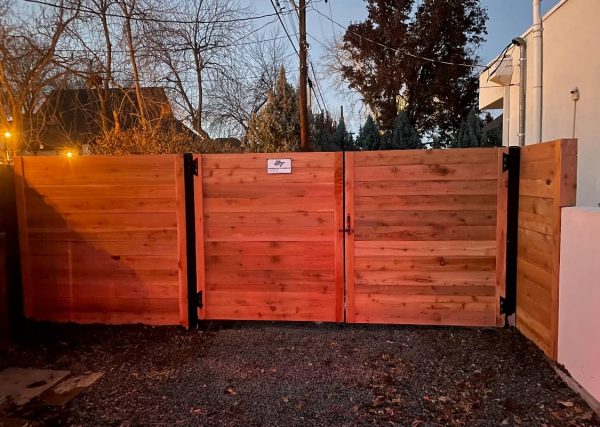
As a residential fencing company Denver homeowners have been working with since 2006, we follow a four-step process designed to keep every project transparent from first conversation to final walkthrough.
- Initial Consultation: We walk your property, discuss your style goals, confirm HOA or zoning requirements, and talk through material options based on your lot conditions and priorities. Everyone on our team has personally installed fences in Colorado, so the guidance you get in the first conversation is grounded in real field experience.
- Approval and Scheduling: Once you’ve approved the plan, we schedule installation and coordinate any HOA documentation. We offer a rush service for projects with tighter timelines, and we’ll discuss any associated fees upfront.
- Installation: We notify you the day before installation by email with timing details. There’s no money down until you’re fully satisfied with the finished project, which means the work speaks for itself.
- Service and Maintenance: Our one-year warranty covers both workmanship and materials. We use the same materials whenever possible on future repairs so additions or fixes match the original fence as closely as possible.
We’re available year-round, including through Colorado winters, for homeowners who can’t wait for spring. We’re BBB-accredited, and you can learn more about our team’s background on our “About” page. Ready to get started? Request your free estimate. No deposit required until you’re satisfied with the plan.
Ready to Find the Right Fence for Your Denver Property?
Fence style decisions in Denver are more specific than generic guides suggest. Getting them right means knowing your neighborhood’s architectural character, your HOA requirements, your lot conditions, and how Colorado’s climate will affect the materials over time. That knowledge comes from being here, working here, and watching how things hold up across seasons.
After 20+ years of residential fencing work across the Denver Metro area, we can walk your property, confirm your requirements, and recommend a style and material that fits. The local fence installers Denver homeowners have relied on since 2006 bring hands-on Colorado experience to every project, large and small.
Get started with a free, no-obligation estimate. No deposit required. You can also explore the full range of options on our residential fencing services page.
Frequently Asked Questions About Denver Residential Fences
What is the maximum fence height allowed in Denver?
In standard residential zones in the City and County of Denver, the general limits are 4 ft in the front yard and 6 ft in the backyard. Specific parcels and zoning designations can vary from these defaults. Always confirm with Denver’s zoning office or permit department for your specific address before installation begins, especially if your lot has unusual characteristics or sits in a historic district.
Do I need a permit to install a fence in Denver?
Denver generally requires a permit for new fence installations. Your contractor should pull the permit on your behalf, which is standard practice and a reasonable quality signal for any reputable local installer. If a contractor tells you a permit isn’t necessary without checking your specific parcel, that’s worth asking about directly.
Does my HOA have to approve my fence before I install it?
If you live in an HOA-governed community, yes. Most HOAs require architectural review board approval before installation begins. Starting without that approval can result in a mandatory removal order, which is an expensive and avoidable outcome. Pull your CC&Rs first, confirm what approval is required, and factor the review timeline into your project schedule.
What fence materials work best in Colorado's climate?
Cedar, vinyl, powder-coated steel or iron, and galvanized chain link each perform well in Colorado’s conditions when installed correctly. The key variables are UV resistance, freeze-thaw performance, and the quality of post-setting depth and hardware. The section on Colorado climate above covers each material’s specific trade-offs for Denver residential fences.
Can you install a fence in winter in Denver?
Yes. We install year-round, including through Colorado winters. Cold-weather installation requires attention to proper footing depth and curing procedures, which is exactly where experience with local conditions matters. We’ve been doing winter installations across the Denver Metro area for years and don’t slow down because the calendar flips to November.

Written by Kyle Fletcher
Kyle Fletcher is the owner and CEO of Andrew‑Thomas Contractors, serving the Denver metro. In fencing since high school, he launched the company in 2006 and oversees estimating, scheduling, and quality checks on residential, commercial, and HOA projects. His team specializes in fence installation and repair, driveway gates, hand rails, and safety bollards, delivering work at or above industry standards. Clients know Kyle for clear communication and clean job sites—habits reflected in the firm’s A+ BBB rating and consistently strong Google reviews.