
- Written by Kyle Fletcher
- Published on August 27, 2026
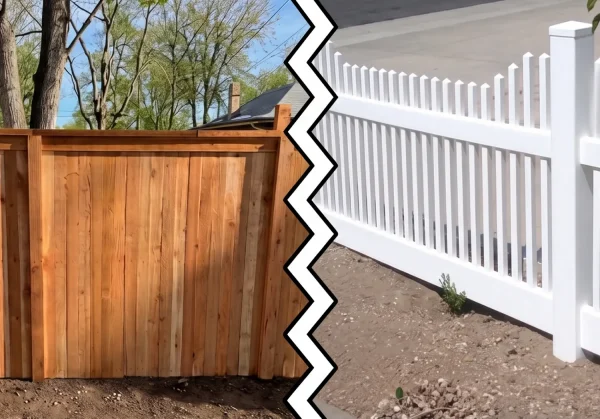
Choosing between cedar and vinyl for Highlands Ranch fences is harder than most national guides suggest, because generic advice doesn’t account for what Colorado actually does to fencing materials. At Andrew-Thomas Contractors, we’ve been installing and repairing both materials across the Denver Metro area since 2006, and in that time we’ve watched fences built with the right materials fail because of poor installation, and fences built with modest materials last decades because the post work was done correctly. This article walks you through the real performance differences between cedar and vinyl in Highlands Ranch specifically, including how the Highlands Ranch Community Association (HRCA) requirements shape the decision before you even pick a material.
Get a Fast, Free Estimate Today! No deposit required, and you don’t pay until the project is completed to your satisfaction.
The Short Answer: Cedar and Vinyl Both Work in Highlands Ranch – With the Right Installation
Both cedar and vinyl can perform well in Highlands Ranch when installed correctly in Colorado conditions. Cedar offers natural warmth, strong repairability, and solid performance in our dry climate when properly stained and maintained on a regular schedule. Vinyl requires far less ongoing upkeep and resists rot, insects, and moisture effectively. The better choice depends on your maintenance tolerance, aesthetic preference, budget, and what your specific HRCA sub-association permits.
Why Choose Andrew-Thomas Contractors for Fence Installation in Highlands Ranch?
Before comparing materials, it helps to know who’s giving you this advice. Andrew-Thomas Contractors was founded in 2006 by Kyle Fletcher, who started in the fencing trade in high school through his family’s business. Every person on our team has personally installed fences in Colorado, which means the guidance here comes from real fieldwork in local soil and weather, not a product brochure.
18-Plus Years of Local Experience
We’ve been installing fencing in Highlands Ranch and the Denver Metro area since 2006. That means every recommendation we make is grounded in real experience with Colorado’s soil, weather, and HOA requirements.
Fix What’s Broken, Not What Isn’t
Most of our work comes from referrals, which means our reputation depends entirely on getting the job right. There’s no money down, so no risk until you’re fully satisfied with your finished project.
Quality Materials, Backed by Warranty
We’re a BBB-Accredited business. We back every installation with a one-year warranty on workmanship and material, and we don’t require a deposit until your project is completed to your satisfaction.
Why Colorado’s Climate Makes This Decision Harder Than It Looks
Intense UV Exposure
Most national fencing websites treat cedar versus vinyl as a style question. Out here, it’s an engineering question. Highlands Ranch sits at roughly 5,900 feet in elevation, and UV exposure increases approximately 6% for every 1,000 feet of elevation gain. That means the sun hitting your fence here is meaningfully more intense than what homeowners in lower-elevation states are dealing with, and it breaks down both wood fibers and lower-grade vinyl faster than most product specifications account for.
Freeze-Thaw Cycles
Freeze-thaw cycles add another layer of stress that’s easy to underestimate. Douglas County soil is predominantly expansive clay, which absorbs moisture and swells when wet, then contracts when it dries out. A post set at the wrong depth in that soil doesn’t stay plumb for long. Every freeze-thaw event pushes and pulls the footing, and within a few seasons a fence that looked fine at installation can be visibly leaning.
Low Humidity Challenges
Colorado’s low humidity creates problems that homeowners moving from wetter states don’t expect. Wood loses moisture faster here, which means shrinkage, surface checking, and end-grain splitting happen on an accelerated timeline compared to humid climates. The dry air that makes Colorado comfortable to live in is genuinely hard on untreated or improperly sealed cedar.
Wind and Hail
Wind and hail round out the picture. Front Range wind events create lateral load stress on full-height privacy panels, and the force is transmitted directly to posts and footings. Hail is a real factor for vinyl surfaces specifically, something we’ll address in more detail below. For a deeper look at how Denver’s climate affects fence materials over time, our post on top fence materials for long-term durability covers the broader picture.
Cedar Fencing in Highlands Ranch: Real Strengths and Real Tradeoffs
Strengths of Cedar Fencing
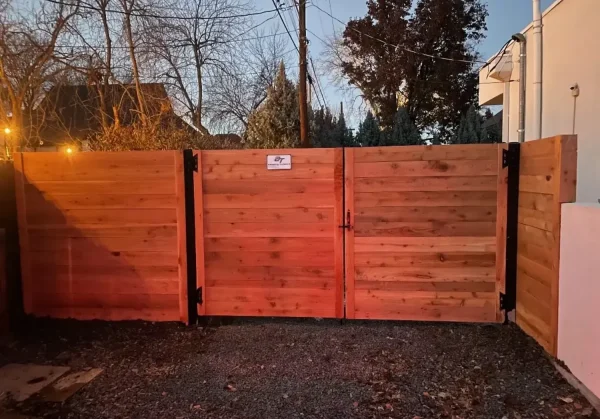
Cedar has genuine advantages in Colorado’s climate that get overlooked when people focus only on the maintenance requirement. As a species, cedar is naturally rot-resistant and handles alternating dry-wet cycles better than softer woods like pine. In our dry high-desert environment, that natural resistance counts for a lot, because the fence isn’t sitting in persistent moisture the way it might in a Pacific Northwest climate.
Many Highlands Ranch design guidelines lean toward wood aesthetics, and cedar fits that context well. The grain, the warmth, and the ability to stain it to a specific color (including the specific brown tones the HRCA commonly requires for wood fences in the community) make cedar a natural fit for neighborhoods with traditional or craftsman-influenced design standards.
Repairability is a real practical advantage. If a board splits, a picket gets knocked loose, or a section takes storm damage, you can replace individual components without tearing out an entire panel run. Our wood fencing service page covers the full range of options we install, but the short version is that cedar’s modular nature makes future repairs cleaner and less expensive than vinyl in most damage scenarios.
Tradeoffs of Cedar Fencing
The tradeoffs are real, and we won’t gloss over them:
- Cedar requires re-staining or re-sealing on a regular cycle, typically every two to four years in Colorado conditions, or the surface deteriorates noticeably.
- Cedar costs less upfront than vinyl in most comparisons, but recurring maintenance costs add up over the life of the fence.
- If staining and sealing a fence every few years doesn’t fit your schedule or budget, cedar will underperform your expectations here.
If you want more detail on what cedar maintenance actually looks like through a Colorado winter, our article on how to maintain your wood fence through Colorado’s harsh winters is a good companion read.
How Colorado’s Dry Climate Affects Cedar Differently Than You Might Expect
The instinct many homeowners have is that humid climates are hardest on wood fences. Humid climates do accelerate rot, but Colorado’s low humidity creates a different set of problems. When wood dries out faster than it can stabilize, it shrinks, and that movement opens surface cracks called checking. End grain, meaning the cut ends of pickets and posts, is especially vulnerable because moisture exits those surfaces rapidly.
A board that might last ten years unsealed in a humid southeastern climate can show visible surface checking and splitting in Colorado within two or three seasons. Proper sealing before installation and consistent re-application afterward matter more here precisely because the drying process is so aggressive. This isn’t a reason to avoid cedar, it’s a reason to take the maintenance schedule seriously from day one.
Vinyl Fencing in Highlands Ranch: Where It Wins and Where It Falls Short
Advantages of Vinyl Fencing
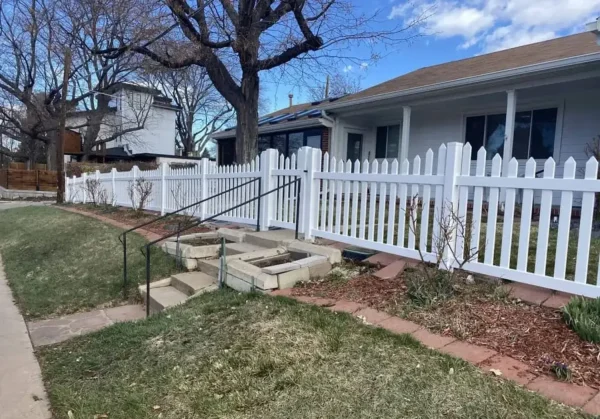
Vinyl’s strongest argument for Highlands Ranch homeowners is simple: once it’s installed correctly, it largely takes care of itself. No painting, no staining, no sealing. Occasional washing with soap and water handles most surface grime. For homeowners managing busy schedules who want a clean, consistent look year after year without recurring labor costs, vinyl is genuinely hard to argue against.
Vinyl also holds color better than unprotected cedar under Colorado’s UV intensity. Quality vinyl products manufactured with UV inhibitors resist the fading and surface degradation that lower-grade material shows over time. The color you install is close to the color you’ll have a decade later, which matters in neighborhoods with HOA color requirements.
Limitations of Vinyl Fencing
The honest limitations of vinyl come down to cold-temperature brittleness and repair complexity:
- PVC becomes less flexible in extreme cold, and a hard impact at or below freezing, from a falling branch, hail, or equipment contact, is more likely to crack a panel than the same impact in warmer conditions.
- Repairs on vinyl are harder to execute invisibly. New panels often don’t match the color and sheen of weathered sections, which can leave visible patchwork on an otherwise clean fence line.
- Not every HRCA sub-association approves vinyl. Certain neighborhoods specify wood in their design standards, which would rule out vinyl entirely regardless of your preference.
On our vinyl fencing service page, you can see the range of styles we install and get a sense of what quality vinyl products look like at installation.
Does Hail Damage Vinyl Fencing in Colorado?
Yes, hail can damage vinyl fencing, and it happens more often than homeowners who move here from other states expect. Standard vinyl panels can show pitting, scuffing, or cracking after a significant hail event, particularly on the side of the fence facing the prevailing storm direction.
The main variables are product gauge and storm severity. Heavier-gauge vinyl holds up noticeably better than thin-wall panels under the same impact conditions. If you’re investing in vinyl for a Highlands Ranch property, material gauge is one of the first specifications to ask about, because the difference in durability between product grades is real.
Installation orientation can also matter. A fence panel facing the direction most Front Range hail comes from takes a more direct hit than panels running perpendicular to the storm path.
Cedar vs. Vinyl: A Side-by-Side Comparison for Highlands Ranch Conditions
| Category | Cedar | Vinyl |
|---|---|---|
| Upfront Cost | Lower | Higher |
| Maintenance | Re-stain/seal every 2-4 years | Occasional washing only |
| UV Resistance | Good when sealed; grays quickly unsealed | Strong with quality UV-inhibitor formulation |
| Freeze-Thaw Performance | Good with proper post depth and footings | Good with quality material and proper footings |
| Hail Resistance | Dents and scratches; repairable board by board | Can crack or pit; heavier gauge performs better |
| Repairability | High: individual boards replaceable | Lower: section replacements may show color mismatch |
| HRCA/HOA Compatibility | Accepted in most sub-associations | Varies; some sub-associations require wood |
| Lifespan with Proper Care | 15-25 years | 20-plus years |
| Aesthetic Options | Natural grain; stainable to HRCA color requirements | Clean, uniform; limited to manufactured color range |
What this table shows at a high level is that neither material dominates across every category. Cedar wins on repairability and upfront cost. Vinyl wins on long-term maintenance burden and color consistency. Both require quality installation to reach the lifespan numbers in the table.
HRCA and HOA Requirements Every Highlands Ranch Homeowner Needs to Know
Highlands Ranch is governed by the Highlands Ranch Community Association (HRCA), and any fence installation requires Architectural Review Committee (ARC) approval before work begins. This isn’t a formality you can circle back to after choosing your materials. The HRCA has specific standards covering fence height, material, color, style, and placement that vary by sub-association and by lot location, including proximity to open space, trails, or common areas.
Some sub-associations in Highlands Ranch specify wood materials in their design standards. If yours does, vinyl isn’t an option regardless of its other advantages. The HRCA also commonly requires specific stain colors for wood fences, so a cedar fence stained to your personal preference may not pass ARC review. Confirming your sub-association’s exact requirements before selecting any material is a necessary first step.
A Douglas County Building Department permit may also be required depending on the scope of your project, in addition to HRCA ARC approval.
We follow HOA guidelines as provided by the homeowner and help our clients work through the approval process as part of our standard service. Our HOA fencing services page gives more detail on how we handle the compliance side of a project. If you want to talk through what your specific sub-association requires before committing to a material, reach out for a free estimate and we can work through it together. No deposit required, no obligation.
Which Material Should You Choose? A Simple Decision Framework
Choose cedar if:
- You want a natural wood aesthetic that most HRCA neighborhoods accept
- You’re comfortable with a maintenance schedule of re-staining or sealing every two to four years
- You want the ability to replace individual boards or sections without a full panel swap
- Your sub-association requires or prefers wood materials
- Your budget favors a lower upfront installation cost
Choose vinyl if:
- You want minimal ongoing maintenance after installation
- You prefer a clean, uniform appearance that holds color without seasonal upkeep
- Your sub-association permits vinyl and doesn’t specify wood
- You’re less concerned about section-matching in future repairs
- You want strong built-in resistance to moisture, rot, and insects
Either choice holds up well when the installation is done correctly.
Post depth, footing quality, drainage around the base, and proper gate bracing matter as much as which material you’re working with. A cedar fence on shallow posts in clay soil won’t last. A vinyl fence on proper footings can give you decades of service with minimal attention.

Why Installation Quality Matters as Much as Material in Colorado
Having installed fences across Highlands Ranch and the broader Denver Metro area since 2006, the most consistent thing we’ve seen is that premature fence failure almost always traces back to installation, not material. Shallow posts, undersized footings, poor drainage at the base, and gates that aren’t adequately braced cause more failures than the choice between cedar and vinyl ever does.
Post Depth and Footing Quality
In Douglas County’s clay soil, posts need to be set to an appropriate depth, typically in the range of 36-42 inches deep, to resist heaving during freeze-thaw cycles. When a post is set too shallow, every winter pushes it a little further out of plumb, and within a few seasons you’re looking at a fence that leans noticeably and eventually fails at the post-footing connection.
Gate Bracing Importance
Gate posts deserve extra attention because they carry more stress than a standard line post. The weight of the gate plus the repeated opening and closing motion creates a lever effect that works against the footing constantly. We brace gate posts specifically for this, because a gate that sags or binds at year three is a direct result of how those posts were set at installation. Proper installation also reduces the likelihood you’ll need fence repair service within the first few years. A fence installed correctly the first time shouldn’t need to be revisited, and that starts underground before a single picket goes up.
Get a Fast, Free Estimate From a Highlands Ranch Fencing Company With Local Experience
Both cedar and vinyl can serve Highlands Ranch homeowners well for decades. The right choice comes down to your neighborhood’s ARC requirements, how much maintenance you’re willing to do, and how well the fence is installed from the ground up.
Andrew-Thomas Contractors is BBB Accredited, backs every installation with a one-year warranty on both workmanship and material, and doesn’t require any money down until the project is completed to your satisfaction. We’ve been doing this work in the Denver Metro area since 2006, and we know what holds up here and what doesn’t.
If you’re ready to move forward, contact us to schedule a free estimate. There’s no deposit, no obligation, and no pressure to decide before you’re confident in the direction. If you’d like more detail on our work in the community before calling, our Highlands Ranch fence installation service page covers the full picture.
Frequently Asked Questions About Fencing in Highlands Ranch
Does the HRCA require approval before installing a fence in Highlands Ranch?
Yes. Any fence installation in Highlands Ranch requires Architectural Review Committee (ARC) approval from the Highlands Ranch Community Association before work begins. Requirements vary by sub-association, so confirm your specific guidelines before finalizing any material or style decision.
Which lasts longer in Colorado, cedar or vinyl?
Both can last 20-plus years when installed correctly and maintained appropriately for the material. Cedar requires regular re-staining or sealing to reach that lifespan. Vinyl reaches it with minimal upkeep, provided the installation uses quality material and proper post depth in Colorado’s clay soil.
Can I install a vinyl fence in any Highlands Ranch neighborhood?
Not necessarily. Some HRCA sub-associations specify wood materials in their design standards, which would make vinyl ineligible regardless of homeowner preference. Confirm your specific sub-association’s requirements before committing to a material.
How deep should fence posts be set in Highlands Ranch?
Posts should be set to appropriate depth to prevent heaving from freeze-thaw cycles. In Douglas County, that typically means setting posts in the range of 36-42 inches deep, with proper concrete footings and drainage around the base.
Do I need a permit for a fence in Highlands Ranch?
A Douglas County Building Department permit may be required depending on the scope of your project, in addition to obtaining ARC approval from the HRCA. We recommend confirming both requirements before work begins.

Written by Kyle Fletcher
Kyle Fletcher is the owner and CEO of Andrew‑Thomas Contractors, serving the Denver metro. In fencing since high school, he launched the company in 2006 and oversees estimating, scheduling, and quality checks on residential, commercial, and HOA projects. His team specializes in fence installation and repair, driveway gates, hand rails, and safety bollards, delivering work at or above industry standards. Clients know Kyle for clear communication and clean job sites—habits reflected in the firm’s A+ BBB rating and consistently strong Google reviews.