

- Written by Kyle Fletcher
- Published on July 14, 2026
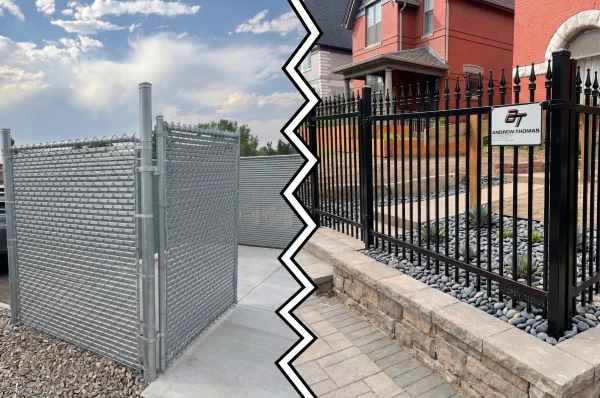
Commercial fencing in Denver requires balancing security, budget, aesthetics, and climate resilience. Since 2006, Andrew-Thomas Contractors has installed both chain link and ornamental fencing across Denver Metro warehouses, retail centers, multifamily properties, and industrial yards, learning exactly which materials hold up under Colorado conditions. This guide walks you through the real trade-offs so you can choose the right fence type for your specific site.
The Short Answer: It Depends on What Your Site Actually Needs
Chain link fencing is the durable, cost-effective choice for industrial yards, warehouses, and public campuses where security and budget are the priority. Ornamental fencing, such as wrought iron fencing, suits retail centers, office parks, multifamily properties, and any site where appearance and first impressions matter alongside security. Knowing where each type genuinely excels saves you from an expensive correction later.

Why Denver’s Climate Makes This Decision More Complicated
Freeze-Thaw Cycles
Denver’s freeze-thaw cycles are hard on post footings and galvanized coatings over time. As temperatures swing between single digits in January and 70-degree afternoons in March, soil contracts and expands repeatedly, which stresses improperly set posts and can work a galvanized coating loose at the base. That cycle repeats dozens of times each winter across Colorado’s Front Range.
UV Exposure at Elevation
UV exposure at elevation compounds the problem for ornamental fencing. Denver sits at over 5,000 feet, where UV intensity is measurably higher than at sea level, and untreated or poorly finished powder coatings fade and chalk faster than property managers expect. We know which finishes hold up here and which ones look tired after two Colorado summers.
Front Range Wind Loads
Front Range wind loads are another factor that often gets underestimated. Gusts during spring and winter storms regularly push 40 to 50 miles per hour across open commercial lots, which means lighter gauge materials and shallow post sets fail well before their expected lifespan. Soil variability across the Denver Metro adds to this: clay-heavy areas in parts of Lakewood and Thornton require different footing depths than the sandier soils found in parts of Aurora and Commerce City. At Andrew-Thomas Contractors, we know which materials to use, how to install properly, and what doesn’t work well here. That knowledge is specific to Denver commercial fencing sites, not generic trade advice.
We install year-round, including through Colorado winters, which keeps commercial project timelines on track when other fence companies go quiet after November.
Chain Link vs. Ornamental Fencing: A Side-by-Side Comparison for Commercial Buyers
Before drilling into the details of each fence type, here’s a direct comparison across the six factors that matter most to commercial buyers:| Category | Chain Link | Ornamental |
|---|---|---|
| Upfront Cost | Significantly lower cost per linear foot; viable for large commercial perimeters | Higher upfront investment; cost is defensible for appearance-sensitive sites |
| Security Rating | Commercial-grade security with barbed wire, razor ribbon, or privacy slat additions | Solid security barrier with anti-climb picket tops and access control integration |
| Aesthetic Impact | Utilitarian; functional appearance suited to industrial and utility applications | Professional, polished appearance that improves curb appeal and brand perception |
| Maintenance Requirements | Periodic tension checks and coating inspections; relatively low maintenance overall | Requires rust prevention attention and occasional recoating; more maintenance than chain link |
| Lifespan in Denver Conditions | 20+ years with proper installation and regular upkeep in Colorado climate | 20+ years with correctly specified powder coating and proper post footings for local soil |
| Best-Fit Commercial Use Cases | Warehouses, industrial yards, school campuses, utility enclosures, equipment yards | Retail centers, office parks, multifamily properties, medical campuses, municipal frontages |
The takeaway for cost-sensitive buyers is clear: chain link delivers dependable commercial-grade security at a fraction of the cost per linear foot compared to ornamental. For buyers where brand image or leasing appeal is a factor, the higher investment in ornamental fencing is one you can typically justify through measurable property impact.

Where Chain Link Wins for Commercial Fence Installation
Value and Large Perimeters
For large commercial perimeters, chain link fencing is simply hard to beat on value. A warehouse in Denver’s industrial corridor, a school athletic field in Thornton, or an equipment yard in Commerce City can span hundreds or thousands of linear feet. Covering that footage with ornamental fencing is rarely practical, and for those sites, it doesn’t need to be.
Corrosion Resistance and Wind Loads
Galvanized and vinyl-coated chain link resists corrosion well in Denver’s freeze-thaw environment when the material is properly specified. Heavy-gauge commercial chain link, 9-gauge or heavier, with correct post spacing handles Front Range wind loads without significant deflection over time. That spec matters on open industrial lots where there’s no windbreak from adjacent structures.
Security and Privacy Options
Barbed wire or razor ribbon topping adds a meaningful security layer without dramatically increasing cost, which is why you see it on manufacturing facilities, utility enclosures, and construction perimeters across the metro. Chain link with privacy slats also works well for back-of-house perimeters at retail or multifamily sites where utility areas don’t need to be visible from the street. It’s fast to install, straightforward to repair, and when something does need attention, it doesn’t require a specialist.
Where Ornamental Fencing Wins for Denver Commercial Properties
Aesthetics and First Impressions
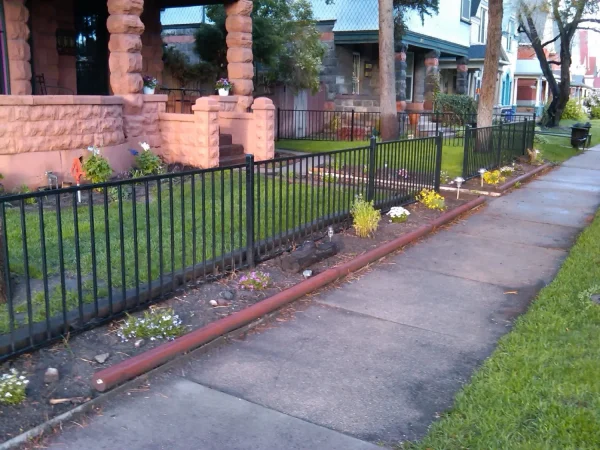
Ornamental fencing such as wrought iron communicates security without looking aggressive, and that distinction matters for a lot of commercial sites. A retail center in Cherry Creek, a medical office park in Highlands Ranch, or a multifamily property in Englewood all have tenants and customers whose first impression of the property starts at the perimeter. Chain link fencing sends a utilitarian message while ornamental fencing sends a professional one.
Durability and Installation
Powder-coated steel and wrought iron hold up to Denver’s UV and freeze-thaw cycles when they’re properly finished and installed. The failure mode we see most often is inadequate post footing depth for the local soil conditions, not the material itself. Get the installation right and ornamental fencing is a long-term asset, not a maintenance burden.
Integration with Automated Gates and HOA Compliance
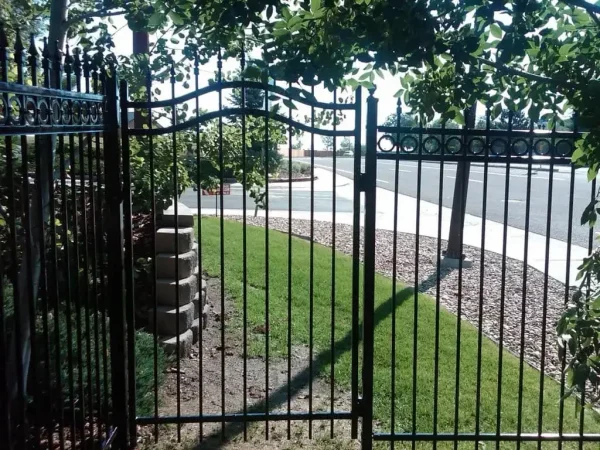
Ornamental fencing also integrates cleanly with automatic and manual driveway gates, which is a real operational need for commercial properties managing vehicle and pedestrian access. For HOA-governed or mixed-use properties in the Denver Metro, ornamental often meets aesthetic covenants that chain link simply won’t satisfy. If your property’s leasing rate, retail traffic, or HOA compliance depends on how the perimeter looks, the ROI on ornamental is measurable over the fence’s lifespan. Commercial fencing and gates paired together as a single system is one of the more common requests we get from multifamily and office park clients.
Commercial Property Type Decision Framework: Matching the Fence to the Site
This is where most commercial buyers get clarity fast. Match your property type to the recommendation, and the material decision usually follows.
Warehouses and Industrial Yards
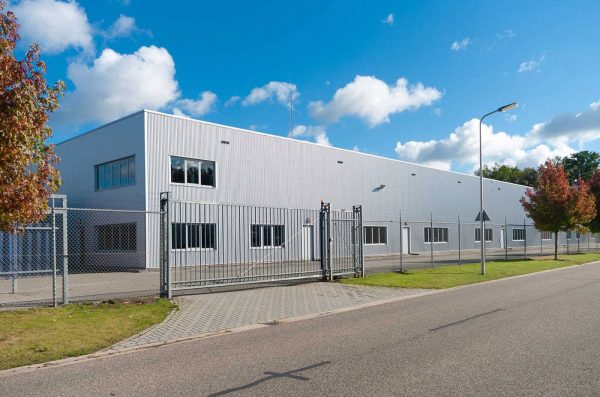
Warehouses and industrial yards benefit from heavy-gauge chain link with barbed wire topping. These sites typically involve large perimeters, security is the primary concern, and appearance is secondary. The same applies to equipment yards, logistics facilities, and utility enclosures across Denver’s industrial corridors.
Retail Centers and Commercial Storefronts
Retail centers and commercial storefronts typically call for ornamental fencing along the primary frontage, with chain link acceptable for service yards, dumpster enclosures, and rear perimeters not visible to customers. The split approach is common and cost-effective.
Multifamily and HOA-Governed Properties
Multifamily and HOA-governed properties almost always require ornamental or decorative steel to satisfy aesthetic standards set by the community or governing documents. Automated gates at entry points are standard on these sites, and we handle the gate and fence installation as one coordinated project.
Schools and Public Campuses
Schools and public campuses generally use chain link for athletic fields and open perimeters where visibility and cost matter most, with ornamental at entry zones and administrative building frontages where appearance and security both apply.
Office Parks and Medical Campuses
Office parks and medical campuses tend to use ornamental fencing along public-facing sides for professional image and chain link on secured utility areas or service corridors behind the building.
Municipal and Government Sites
Municipal and government sites typically specify heavy-duty chain link for secured perimeters and ornamental for public-facing areas near entrances, parking structures, and pedestrian zones.
Many commercial properties end up using both fence types in different zones, and that is not a compromise. It’s often the right engineering and budget decision. We handle both on a single project, which simplifies coordination and keeps the installation consistent throughout.
Denver Zoning, Permits, and HOA Compliance for Commercial Fencing
Permit Requirements
Most commercial fence installations in Denver and the surrounding municipalities require permits, and the requirements are not uniform. Denver proper, Aurora, Lakewood, Thornton, Broomfield, Englewood, and Westminster each have their own codes, with fence height limits for commercial zones typically differing from residential zones. Setbacks along property lines and rights-of-way add another layer that varies by municipality.
HOA Covenants
HOA-governed commercial or mixed-use properties carry additional aesthetic covenants that can restrict material choices, colors, and fence heights beyond what the city requires. We’ve seen projects where the city permit was straightforward and the HOA covenant added specific requirements around ornamental finish color or picket style. Knowing that combination in advance saves a mid-project redesign.
Skipping the Permit Process
Skipping the permit process is a real liability for commercial property owners and managers. A fence installed without proper permits can require modification or removal, and that cost falls on the property. We’ve navigated the permitting process across every major community in our service area since 2006, and permit handling is part of how we run a commercial fence installation, not an afterthought.
If you manage multifamily or HOA-governed commercial properties and want more detail on the compliance side, our HOA and Property Manager’s Guide on what to look for when hiring a Denver commercial fence company covers the specifics in depth. Our HOA Fence Contractor Services page offers more information on our HOA fencing work.

What to Ask Any Commercial Fencing Company Before You Sign
Buyer education is part of how we operate, so here are the questions every commercial property manager, facility director, or GC should ask before signing a fencing contract.
Experience and Permits
- Do they require a deposit before starting work? We don’t. As we state directly to every client: “There is no money down, so no risk until you’re fully satisfied with your finished project.” That policy is not typical in this market, and it exists because we stand behind the work before we ask for payment.
- What warranty do they provide on workmanship and materials? We back every installation with a one-year warranty on both. Are they BBB accredited? Can they install year-round, including during Denver winters? Do they have hands-on experience with the specific fence type you’re specifying, whether chain link, ornamental, or both?
Payment and Guarantee
- Warehouses and industrial yards benefit from heavy-gauge chain link with barbed wire topping. These sites typically involve large perimeters, security is the primary concern, and appearance is secondary. The same applies to equipment yards, logistics facilities, and utility enclosures across Denver’s industrial corridors.Do they require a deposit before starting work? We don’t. As we state directly to every client: “There is no money down, so no risk until you’re fully satisfied with your finished project.” That policy is not typical in this market, and it exists because we stand behind the work before we ask for payment.
- What warranty do they provide on workmanship and materials? We back every installation with a one-year warranty on both. Are they BBB accredited? Can they install year-round, including during Denver winters? Do they have hands-on experience with the specific fence type you’re specifying, whether chain link, ornamental, or both?
Those questions filter out a significant portion of the commercial fence companies in Denver that depend on homeowner-scale work and treat commercial projects as an occasional add-on.
Request your free commercial estimate with no money down and no obligation.
Our Process for Commercial Fence Installation in Denver
We follow a four-step process on every commercial fencing project, and it’s built around the communication and schedule discipline that commercial clients actually need.
Step One: Initial Consultation
A site visit where we assess the property, discuss material options based on your site’s function and Denver’s climate factors, and scope the project accurately. Every person on our team has personally installed fences in Colorado, so the recommendation you get reflects real field experience, not a catalog comparison.
Step Two: Approval and Scheduling
After measurements and scope are confirmed, we provide a transparent proposal, we can help with permit coordination across the relevant municipality, and schedule installation around your commercial timeline. We offer a rush service option for projects with tighter deadlines; any associated fees are discussed upfront.
Step Three: Installation
Our crew works with correct materials specified for local soil conditions and Colorado climate performance. We install year-round, including through winter months, which keeps tenant improvement schedules and construction timelines intact when other fence companies in Denver aren’t operating.
Step Four: Service and Maintenance
We stand behind our fences after installation, and we use the same materials whenever possible so future repairs match the existing fence. Our fence repair services are available ongoing, not just during the warranty period. The one-year warranty on workmanship and materials is documented and starts at project completion.
The Bottom Line: Choosing the Right Commercial Fencing Company in Denver
The chain link versus ornamental decision comes down to your site’s function, security requirements, aesthetics, and budget. Both are legitimate commercial solutions when they’re properly specified and installed for Denver’s actual conditions. The material choice matters less than most buyers think at the start of the process. What matters more is whether the contractor knows local code, understands how Colorado’s climate affects long-term performance, and has actually installed both fence types on commercial sites in this market.
Andrew-Thomas Contractors has been doing exactly that since 2006. Our team has personally installed chain link and ornamental fencing across Denver, Aurora, Lakewood, Englewood, Centennial, Westminster, Thornton, Broomfield, Arvada, Highlands Ranch, Littleton, and every other major community in the metro. No deposit is required on most projects, and all work is backed by a one-year warranty on workmanship and materials, and we’re BBB accredited. Our commercial fencing services page covers the full scope of what we do for commercial clients, and if you’re considering an upgrade to an existing fence, our commercial fence upgrade resource walks through how to approach that decision.
Get a free commercial estimate today. No deposit required, no obligation.
Frequently Asked Questions: Commercial Fencing in Denver
How much does commercial fence installation cost in Denver?
Costs vary significantly depending on fence type, linear footage, material gauge, site conditions, and gate requirements. Chain link costs less per linear foot than ornamental fencing, often substantially less for large perimeters. Request a site-specific estimate for accurate numbers; we don’t quote off square footage alone.
Do I need a permit for commercial fencing in Denver?
Yes. Most commercial fence installations in Denver and surrounding municipalities including Aurora, Lakewood, Thornton, and Westminster require permits. Requirements vary by city and depend on fence height, placement, and zoning classification. We handle permit coordination as part of our commercial fencing services.
How long does commercial fence installation take?
Timeline depends on scope, material, site conditions, and permit processing in the relevant municipality. We schedule efficiently and install year-round, so commercial project deadlines don’t have to wait for spring. We’ll give you a realistic timeframe at the consultation before any work is scheduled.
Can I use both chain link and ornamental fencing on the same property?
What is the lifespan of a commercial fence in Colorado's climate?
Both chain link and ornamental fencing can reach 20-plus years with proper installation and maintenance. Denver’s freeze-thaw cycles and elevated UV exposure make correct post footing depth and material specification especially important. A fence installed to commercial-grade standards for local conditions will significantly outlast one that was not.

Written by Kyle Fletcher
Kyle Fletcher is the owner and CEO of Andrew‑Thomas Contractors, serving the Denver metro. In fencing since high school, he launched the company in 2006 and oversees estimating, scheduling, and quality checks on residential, commercial, and HOA projects. His team specializes in fence installation and repair, driveway gates, hand rails, and safety bollards, delivering work at or above industry standards. Clients know Kyle for clear communication and clean job sites—habits reflected in the firm’s A+ BBB rating and consistently strong Google reviews.
