

- Written by Kyle Fletcher
- Published on August 28, 2026
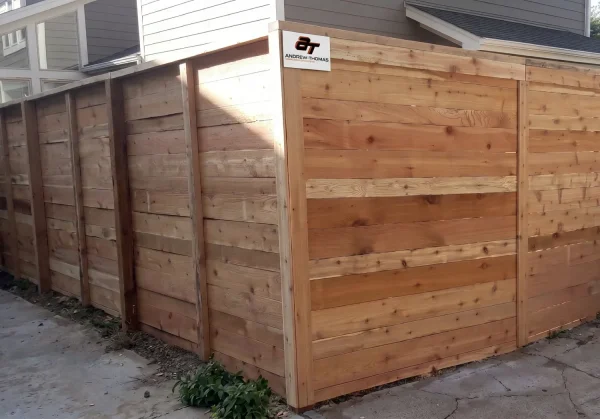
Nobody tells you this when you move to Denver: the sun here is harder on your fence than almost anywhere else in the country. At 5,280 feet above sea level, your fence boards, rails, and posts absorb more ultraviolet radiation every single day than they would at sea level, and that gap adds up over years in ways the product label doesn’t account for. If you’ve been searching for Denver fence repair and wondering why your fence looks older than it should, altitude is a big part of the answer. At Andrew-Thomas Contractors, we’ve been installing and repairing fences across the Denver Metro area since 2006, and we see this pattern constantly: fences that should have another decade in them, aging out early because homeowners were given sea-level lifespan numbers for a mile-high climate.
The Short Answer: Altitude Changes How Fast Your Fence Ages
Denver’s elevation exposes your fence to more UV radiation than lower-elevation cities, every day of the year. That extra UV load makes vinyl panels brittle, breaks down the natural fibers in wood, and dries out materials faster than the manufacturer’s chart assumes. If your fence looks older than its age, altitude is likely a factor.

What 5,280 Feet Actually Does to UV Radiation
According to the EPA, UV radiation increases roughly 6-10% for every 1,000 meters of elevation gain. Denver sits at approximately 1,609 meters above sea level, which means your fence is absorbing more UV than a comparable fence in a coastal or Midwest city. That’s not a small rounding difference over a 15-year fence lifespan.
Denver also averages around 300 sunny days per year. That combination of intensity and frequency does the real damage. It’s not just that the UV is stronger on any given day. It’s that there are very few cloudy days to give your fence a break.
Temperature swings make this worse. Denver can hit 70 degrees in February and drop below freezing the same night. That cycle of expansion and contraction stresses wood fibers and vinyl panels from the inside, working alongside UV to open up cracks and weaken joints. The dry air pulls moisture out of wood faster than a humid climate would. UV, heat cycles, and low humidity don’t operate separately; they work together on your fence every single season.
How UV Breaks Down Wood Fences in Denver
Wood contains lignin, a natural polymer that holds wood fibers together and gives boards their structural integrity. UV radiation attacks lignin directly. As lignin degrades, the surface fibers loosen and the wood starts to turn gray. Sunlight degrades lignin near the wood surface, making wood more susceptible to erosion and surface checking over time.
Surface checking is the term for those hairline cracks that run with the grain of the board. They’re not just cosmetic. Once checking opens up, moisture gets into the wood, and in Denver’s freeze-thaw cycles, that moisture expands and contracts inside the crack every spring and fall. A small surface check becomes a split. A split becomes structural failure.
Manufacturer lifespan estimates for cedar and pine wood fencing are generally built around temperate, lower-elevation climates. A Denver homeowner using those numbers is starting from the wrong baseline. We’ve seen properly installed cedar fences in Denver suburbs show significant surface checking by year four or five, in cases where the fence went up without a quality UV-blocking stain and wasn’t maintained on a local schedule. That’s not a product failure; it’s a climate mismatch.
Posts are especially vulnerable. Above grade, they face UV and dry air. At grade, they face moisture and freeze-thaw movement. That combination from two directions tends to concentrate damage right where the post enters the ground. If you’re considering wood fencing repair in Denver, post condition is always the first thing we assess.
Visual Warning Signs on Wood Fences
Walk your fence line and look for these specific indicators:
- Graying or silvering: across the face of boards, particularly on south- and west-facing runs
- Surface checking: hairline cracks running lengthwise with the grain, often visible when you crouch and look along the board
- Splitting or splintering: at board edges, especially near the top rail or gate frame
- Warping or cupping: where boards have pulled away from flat, creating a curved or bowed surface
- Peeling in large sections: rather than small flakes, indicating the coating bond has broken down
- Posts that move: when you push them from the side, even slightly, suggesting structural compromise at grade
If you’re seeing more than one of these signs, it’s worth getting eyes on the fence before one problem compounds into several. You can request a free on-site estimate through Andrew-Thomas Contractors with no deposit required to get started.

How UV Damages Vinyl Fences at Denver’s Elevation
Vinyl fencing is manufactured with UV stabilizers, typically titanium dioxide and other chemical compounds, added specifically to slow photo-oxidation. The problem is that those stabilizers don’t last indefinitely. They deplete over time, and Denver’s UV load depletes them faster than the rate assumed in most product testing, which tends to occur at lower elevations.
Once the stabilizers are spent, the PVC itself begins to break down. The fence starts to fade, often shifting from bright white to a dull yellow or gray. A chalky residue appears on the surface, which is the outer layer of the material actually degrading. At that point, the vinyl becomes brittle. A panel that used to flex under impact will crack or shatter.
Fading and chalking are early warnings. Brittleness is a structural problem, and it tends to show up first at gates, rail pockets, and post tops, where mechanical stress combines with sun exposure. UV damage in vinyl is largely irreversible once it sets in. You can clean chalking off the surface, but you can’t restore flexibility to brittle PVC. That’s why catching it early matters.
Lower-grade vinyl products are more susceptible because they contain fewer or lower-quality stabilizers to begin with. If your fence was installed with budget materials, you may see these signs sooner than you’d expect.
Visual Warning Signs on Vinyl Fences
Check these areas on your next walk around the yard:
- Color fading: from bright white to dull gray or yellow, especially on south-facing sections
- Chalky residue: that transfers to your hand when you run a finger along a rail or picket
- Hairline cracks: at the corners of panels, at post tops, or at rail-to-post connections
- Reduced flex: press gently on a panel mid-span; if it barely moves and feels stiff, UV brittleness may have set in
- Bowing or warping: of rails or panels that used to sit flat
- Creaking sounds: when the fence moves in wind, which can signal that the material has lost its normal flexibility
Chalking is the early warning sign most homeowners miss. By the time cracking appears, the window for a simple repair may have already passed. If you’re seeing chalking or fading on your panels, we can assess whether repair or full replacement makes sense. Request a free estimate and we’ll take a look at no cost to you.
Repair vs. Replace: How We Help Denver Homeowners Make the Right Call
This question comes up on nearly every estimate call, and the honest answer depends on what we find when we look at the whole fence, not just the damaged section.
Fence repair is the right call when damage is isolated to a few boards, one section, or a single post. If the posts are structurally sound, the rails are holding, and the rest of the fence is in reasonable shape, targeted repairs will extend the fence’s life at a fraction of replacement cost. For broken fence situations where a storm took out one panel or UV cracking is limited to one run, fence repair almost always makes sense.
New fence installation / replacement becomes a better investment when posts are compromised throughout the fence line, when UV brittleness has spread across most of the vinyl, or when the cost of repairing multiple disconnected sections starts to approach the cost of a new fence. A rough guide we use: if repair quotes are running 50-60% of what a replacement would cost, the math usually favors starting fresh with materials suited to Denver’s conditions.
For fence post repair specifically, post condition is the deciding factor. A fence with sound posts can often be repaired efficiently. A fence with failing posts throughout the line needs more than patching.
We’re not going to push you towards a full replacement if a repair is the honest answer, and we won’t suggest a patch job if the fence is past the point where repairs hold. That’s not how we operate. There’s no money down until you’re satisfied with the finished project, and we’ll walk you through the options before you commit to anything.
Not sure which category your fence falls into? Our Denver fence repair team offers free on-site estimates throughout the Denver Metro area. No deposit required to get started.

What to Expect When You Call Andrew-Thomas Contractors for a Denver Fence Repair
If you’ve had a bad experience with a contractor before, you’ll want to know exactly how this works before picking up the phone. Here’s what the process looks like with us.
We start with a free on-site estimate: One of our team members comes out, looks at the actual fence, and gives you a clear assessment of what needs to be done and what it will cost. No deposit is required to schedule. You don’t pay anything until the project is finished and you’re satisfied with the result.
When we replace damaged sections: We use the same materials whenever we can. This matters because UV has already weathered your existing fence to a certain color and texture. A bright new board next to a five-year-old weathered board stands out. Matching materials keeps repairs from looking like patches.
We’re available M-F 7am to 5pm, including winters: Denver homeowners who spot fence damage in November don’t have to wait until April to fix it. Fence repair in Denver is something we do year-round, and if you have an urgent situation, we can discuss options for a faster turnaround.
For homeowners in HOA-heavy suburbs: We’re familiar with HOA material and color requirements and can help make sure repairs stay compliant. We serve Highlands Ranch, Parker, Centennial, Applewood, Arvada, Lakewood, Westminster, Aurora, Littleton, Thornton, Englewood, Northglenn, Broomfield, and the broader Denver Metro area.
If you need emergency fence repair after a storm or collision, reach out directly at 303-434-7926, and we’ll talk you through timelines and options. We cover a wide geographic range and can typically schedule an estimate visit quickly.
Every repair is backed by our one-year warranty on both workmanship and materials.
18 Years of Watching Denver’s Climate Work on Fences
Andrew-Thomas Contractors was founded by Kyle Fletcher in 2006, starting in the fencing trade through the family’s business at a young age. This is worth noting because Denver’s specific climate conditions take years of direct observation to fully understand.
Everyone on the team has personally installed and repaired fences in Colorado. Not in another state, not in a national training program, but here, where the soil is expansive clay in many Front Range neighborhoods, where freeze-thaw cycles put real stress on post footings, and where a south-facing cedar fence can gray and check faster than homeowners expect.
With over nearly two decades of work across the Denver Metro area, Andrew-Thomas Contractors has developed a clear picture of what the mid-lifecycle plateau looks like for UV-stressed wood and vinyl, which neighborhoods have soil conditions that accelerate post movement, and why matching existing weathered materials matters aesthetically after years of sun have changed the surrounding fence’s color.
We’re a BBB-accredited business, and our reputation is built on long-term local service rather than volume. Learn more here about our team and our approach.
Most fence lifespan claims come from manufacturers testing in controlled conditions at lower elevations. We’ve watched what actually happens to those same products in Denver’s sun and weather for close to 20 years. That gap between the label and the reality is exactly why this article exists, and it’s the kind of thing nobody tells you when you move here.

Practical Steps Denver Homeowners Can Take Now
You don’t have to wait for a contractor to tell you whether your fence has a problem. Here are five things you can do on your own before or alongside calling for an estimate.
- Walk your fence line and look for the warning signs covered above: Do this on a sunny day, looking at each material type specifically. South- and west-facing sections get the most UV and tend to show damage first.
- Check posts for lateral movement: Push each post gently from the side. A post with more than a small amount of give is showing structural compromise and should be evaluated before the problem worsens.
- Document damage with photos before calling: Photograph anything that looks off, including close-ups of cracks, gray spots, and base conditions around posts. This helps us give you a more accurate estimate and gives you a record of how the damage has progressed if you defer the repair.
- Check your HOA rules if applicable: Some associations have approved material lists, color requirements, or height restrictions that affect both repair and replacement decisions. Knowing those constraints before the estimate saves time.
- Don’t wait until a panel falls over: UV damage progresses, and deferred repairs typically cost more. A small section of surface checking addressed early is a fraction of the cost of a structurally compromised post you have to replace entirely.
When you’re ready to take the next step, a free estimate is the lowest-friction way to get a clear answer.
Get a Free Denver Fence Repair Estimate – No Deposit, No Pressure
Denver’s elevation changes the rules for fence lifespan, and most homeowners don’t find out until the fence is already showing it. If you’ve noticed graying, checking, chalking, or brittleness on your fence, you’re seeing real UV damage, and the sooner it gets assessed, the more options you have.
Andrew-Thomas Contractors has been serving Denver Metro homeowners since 2006. There’s no money down until you’re fully satisfied with the finished project, and every repair we do is backed by a one-year warranty on workmanship and materials.
Free estimates are available. You can reach us online through our contact page, or go directly to our Denver fence repair service page to learn more about what we cover. No deposit, no sales pressure, and no obligation.
Related Resources
You might also find these pages helpful as you research your options:
- Denver Fence Repair Services – Our full residential fence repair service page, covering the types of repairs we handle across the Denver Metro area.
- Wood Fencing – Details on wood fence materials, installation, and what to consider in Colorado’s climate.
- Vinyl Fencing – Information on vinyl fence options, UV-rated products, and repair considerations.
- Top Fence Materials for Denver’s Climate – A deeper look at how different fence materials hold up in Colorado’s weather conditions.
- Wood Fence Maintenance Through Colorado Winters – Practical seasonal maintenance guidance for wood fences in the Denver area.

Written by Kyle Fletcher
Kyle Fletcher is the owner and CEO of Andrew‑Thomas Contractors, serving the Denver metro. In fencing since high school, he launched the company in 2006 and oversees estimating, scheduling, and quality checks on residential, commercial, and HOA projects. His team specializes in fence installation and repair, driveway gates, hand rails, and safety bollards, delivering work at or above industry standards. Clients know Kyle for clear communication and clean job sites—habits reflected in the firm’s A+ BBB rating and consistently strong Google reviews.
