

Commercial fencing projects in Denver are rarely as straightforward as they appear on the front end. When the property in question falls under HOA governance, the complexity increases significantly, and the margin for error shrinks just as fast. For property managers, HOA boards, and developers operating in the Denver Metro area, understanding the compliance landscape before breaking ground is not just good practice. It is the difference between a project that runs on schedule and one that requires costly removal, revision, and reinstallation.
Andrew-Thomas Contractors has worked alongside property managers and developers across Denver Metro neighborhoods for more than 20 years. The pattern we see most often is not a lack of intent to comply. It is a lack of early planning. This article is designed to close that gap by walking through what HOA-governed commercial fencing actually requires, where projects typically run into trouble, and how working with a locally experienced contractor changes the outcome.
Which Commercial Properties in Denver Fall Under HOA Oversight
One of the most common misconceptions we encounter is that HOA oversight is a residential concern. In practice, HOA authority extends well into commercial and mixed-use environments, and developers often discover this later in the planning process than is ideal.
Commercial property types in the Denver Metro area that are commonly subject to HOA governance include:
- Multi-family housing communities and apartment complexes within planned developments
- Mixed-use developments where residential and commercial components share community design standards
- Retail centers and office parks located within or adjacent to residential neighborhoods governed by a master HOA
- Townhome and condominium communities with shared exterior spaces and common area fencing
- Community amenity spaces such as pools, parks, and recreational facilities that fall under association management
If your project touches any of these property categories, HOA review is likely part of your compliance picture. Identifying that early, before design decisions are made, is one of the most straightforward ways to protect your timeline and budget.

The Two Regulatory Systems Every Denver Commercial Fencing Project Must Satisfy
HOA-governed commercial fencing projects in Denver do not operate under a single compliance framework. They operate under two, and those systems do not automatically align.
HOA Architectural Review and Design Standards
Before any fencing work begins on an HOA-governed property, most associations require formal submission to an architectural review board. The documentation requirements vary by community, but commonly include:
- Design plans with material specifications and dimensions
- Site drawings showing fence placement relative to property boundaries and existing structures
- Finish and color details consistent with community design guidelines
- Any relevant HOA covenants or design standard references that apply to the project type
Approval timelines vary considerably. Some HOA boards can turn around a review in a matter of days. Others meet on a monthly schedule, and a missed submission window means waiting for the next cycle. Incomplete or incorrect submittals reset the clock entirely, which is why accurate, complete documentation on the first submission matters as much as anything else in the process.
City of Denver Permitting and Zoning Requirements
Separately from HOA approval, commercial fence installations in Denver generally require permits through the city’s building and zoning departments. Relevant considerations at this layer include:
- Height restrictions that vary by zoning classification and fence placement
- Setback requirements from property lines, rights-of-way, and adjacent structures
- Material and structural standards that apply to commercial installations regardless of HOA preferences
- Utility proximity requirements that affect post placement and installation methods
Denver’s zoning classifications are not uniform across the metro area, and what is permissible in one commercial zone may not be allowed in another. Contractors with direct local permitting experience understand how to sequence applications correctly and how to anticipate city-level requirements before they create project delays.
Where the Two Systems Create Friction
The most important thing to understand about these two regulatory layers is that they operate independently. HOA approval does not guarantee city permit approval, and city-permitted plans are not automatically acceptable to an HOA board.
The most common friction point is material specification. An HOA may favor ornamental steel for its aesthetic consistency with the community, while city code imposes structural or installation requirements that affect how that material can be used. Conversely, a material that passes city review easily may conflict with the HOA’s design guidelines for the neighborhood.
Contractors who are familiar with both systems can identify these conflicts before submittal. That is not a small advantage. It is the difference between a project that moves forward and one that stalls while both compliance tracks are revised independently.

Choosing the Right Fence Design and Material for HOA Approval in Denver
Design and material and selection in HOA-governed commercial fencing projects is a strategic decision, not just an aesthetic or budget one. The design and material you specify affects your approval likelihood, your timeline, and your long-term maintenance obligations, and in Colorado, it also has to perform through freeze-thaw cycles, UV exposure, and soil conditions that are harder on fencing than many property managers anticipate.
Here is how the most common commercial fencing designs and materials tend to be received in Denver HOA environments:
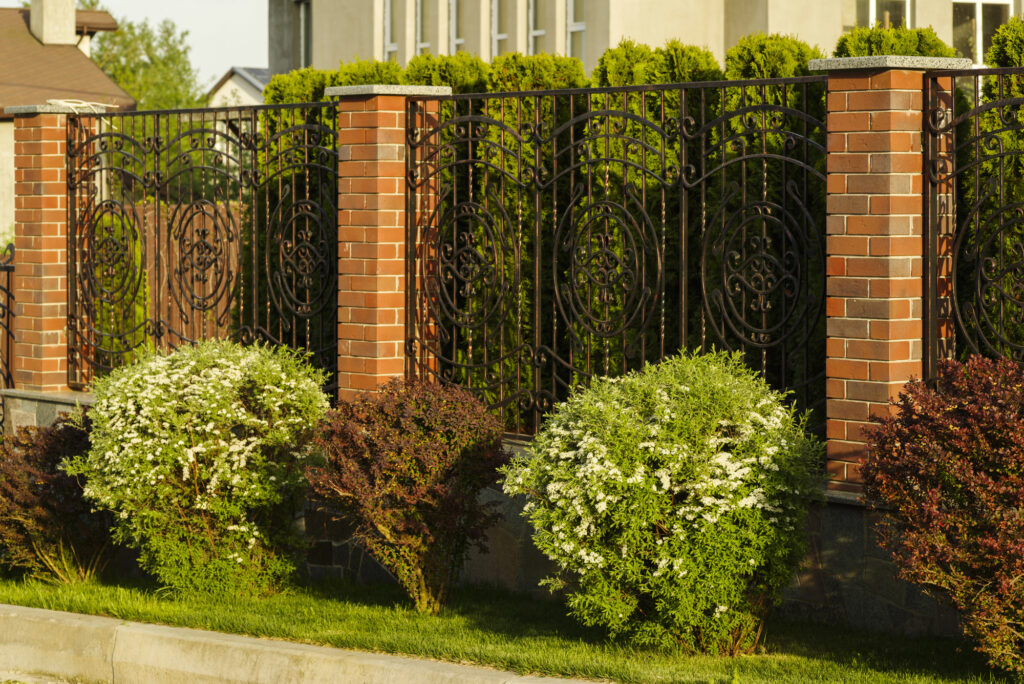
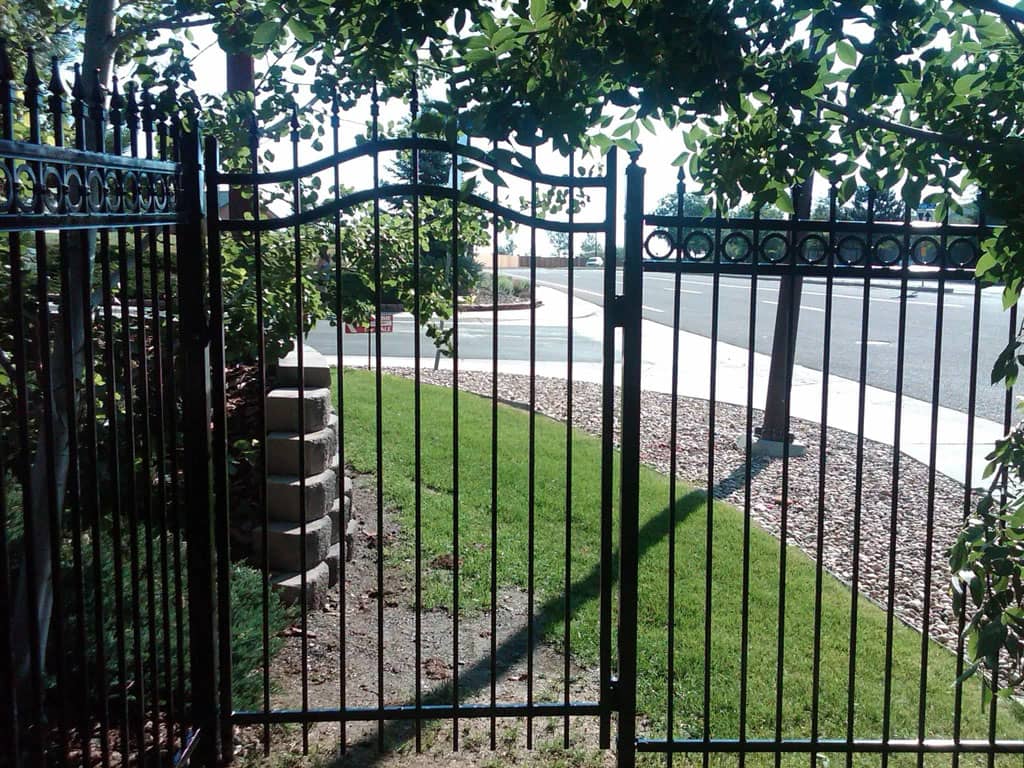
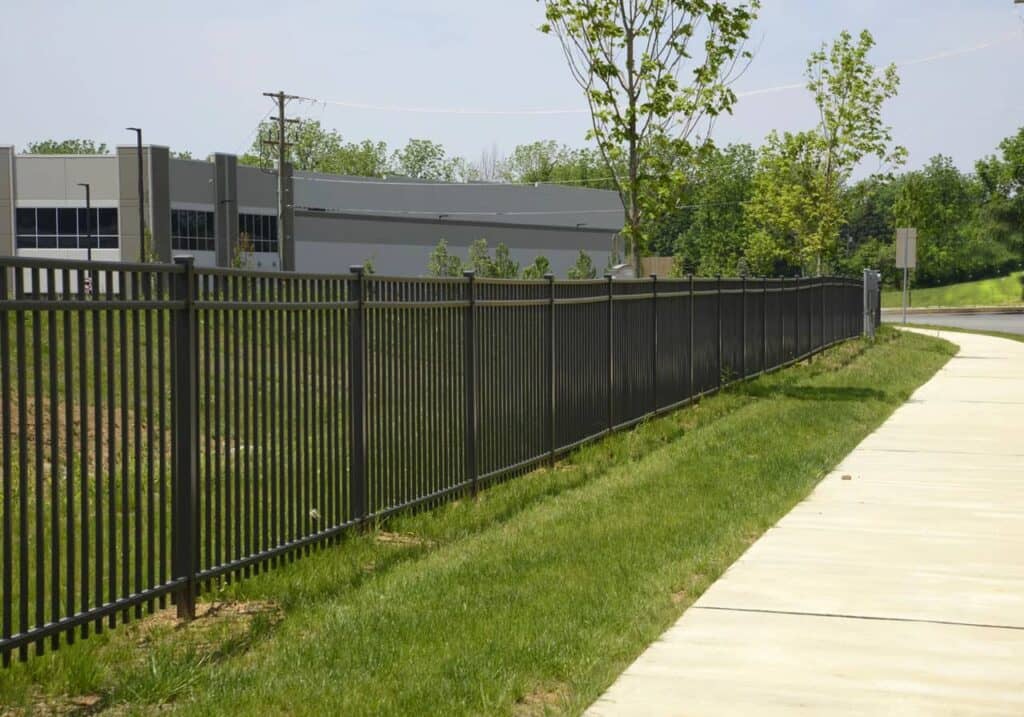
Ornamental iron and steel consistently earn high approval rates from architectural review boards across Denver Metro communities. They signal permanence, quality, and design consistency, which aligns with what most HOA boards are trying to protect. For commercial and mixed-use properties where security and curb appeal both matter, ornamental options are typically the path of least resistance through the approval process.
Vinyl fencing is well-received in newer master-planned developments and mixed-use communities where low-maintenance materials are specifically called out in community design guidelines. It performs well in Colorado’s climate and holds its appearance without the ongoing maintenance that wood requires.
Wood fencing is appropriate in specific residential-adjacent commercial zones, particularly where the surrounding community uses wood as its primary material. HOA reception depends heavily on species, finish, and style consistency with existing fencing. It is not a universal fit, but it is the right choice in the right context.
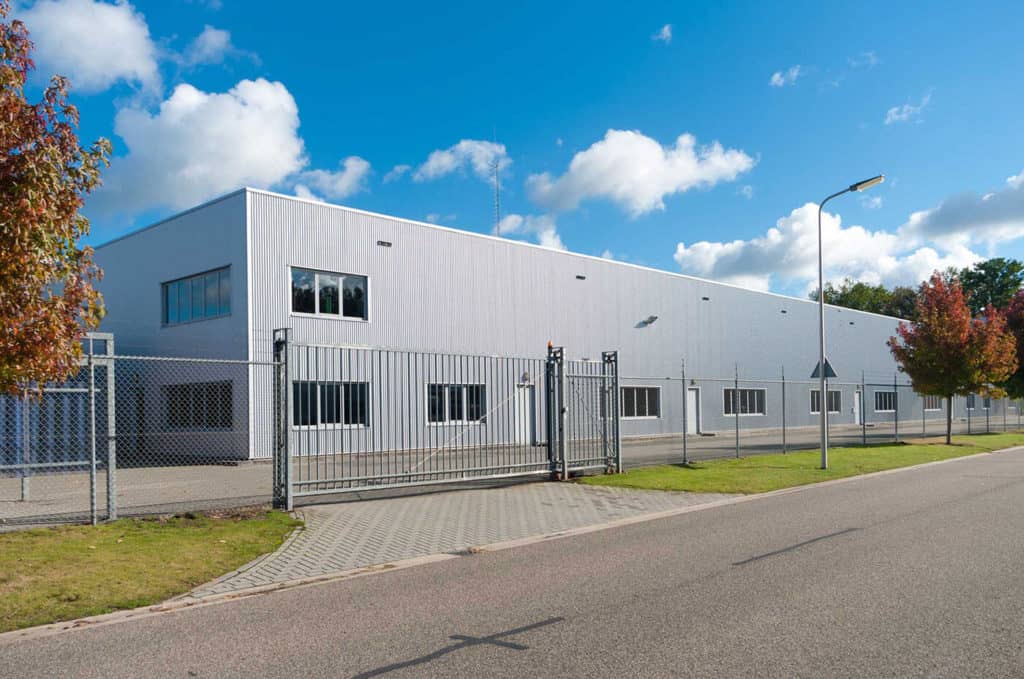
Chain link is the most restricted material in HOA-governed environments and for good reason from the board’s perspective. It is frequently required to be screened, coated in black vinyl, and positioned in non-visible or rear-facing locations where it does not affect the visual character of the community. In front-facing or high-visibility commercial applications, chain link is often not approvable regardless of how it is specified.
The guiding principle here is to let HOA design standards lead the material decision, then evaluate performance and budget within that approved range. We have seen projects delayed significantly because a contractor specified a material without checking HOA guidelines first. That is a preventable problem.
Why Design Consistency Matters More Than You Might Expect
HOA boards in Denver prioritize visual uniformity across their communities, and that priority extends to commercial fencing in ways that property managers sometimes underestimate. It is not enough for a fence to be structurally sound and properly permitted. It also needs to look like it belongs.
Even small deviations from community design standards can result in submittal rejection. Post cap style, picket spacing, finish color, and panel height are all details that HOA architectural review boards evaluate carefully, particularly in established communities where the existing fencing sets a visible standard.
For properties where fencing is being added to or repaired within an existing HOA community, matching the existing fence material and style is often a governing requirement. We follow this practice as a standard part of our process. We use the same materials whenever possible on repairs and additions specifically so that the finished product matches what is already there. In an HOA commercial context, that approach is not just good craftsmanship. It is compliance.
What Non-Compliance Actually Costs — Beyond the Rebuild
The financial case for getting HOA compliance right the first time is straightforward. Non-compliant installations in HOA-governed environments typically require full or partial removal and reinstallation, effectively doubling labor and material costs on the affected sections. But the costs do not stop there.
The downstream consequences of non-compliance in commercial HOA projects commonly include:
- Delayed occupancy timelines when tenants cannot move into a property that has not passed final HOA review
- Project delivery setbacks that affect developer ROI and contractor relationships on multi-phase developments
- HOA-issued fines or forced modifications that create administrative and legal obligations beyond construction costs
- Damaged standing with the HOA board, which can complicate future projects in the same community
- Duplicated permit fees and inspection costs when reinstallation requires going back through the city permitting process
The cost of proper planning and accurate submittal preparation is a fraction of any one of these outcomes. Engaging a contractor who understands both the HOA review process and the Denver permitting landscape is one of the most direct ways to protect your project from these risks.
What a Denver-Experienced Fencing Contractor Brings to an HOA Project
Not every commercial fencing contractor is equally positioned to handle HOA-governed projects. The difference between a contractor who has spent decades working across Denver Metro neighborhoods and one who treats this market like any other is most visible in exactly the situations where compliance complexity is highest.
Here is what local, HOA-experienced contractors do differently:
- They anticipate restrictions before submittal: Contractors familiar with Denver HOA communities understand common approval patterns and can flag likely objections before the application goes in, reducing revision cycles and protecting timelines.
- They coordinate both compliance layers simultaneously: Rather than treating HOA approval and city permitting as sequential steps, experienced local contractors manage both tracks in parallel, identifying conflicts early and resolving them before they become project-stopping problems.
- They bring neighborhood-level awareness to every project: HOA standards in Denver are not uniform. What is approved in one community may be rejected in another. Contractors who have worked across the metro area understand these variations and bring that knowledge to material selection, design recommendations, and submittal preparation.
- They provide guidance throughout the process, not just at installation: Property managers and HOA boards have questions that go beyond the fence itself. Permit requirements, design standard interpretation, HOA documentation needs — these are questions that come up throughout a project, and they deserve answers from someone who has navigated them before.
Every member of our team has personally installed fencing in Colorado. That is not a credential claim. It’s the reason our recommendations are grounded in what actually works in this market, rather than what works in general.
The Single Biggest Factor in HOA Commercial Fencing Success
If there’s one piece of guidance that applies to every HOA commercial fencing project in Denver, it is this: engage your fencing contractor before design decisions are locked in.
Contractors brought into the conversation during site planning or pre-construction phases can inform material selection, help prepare accurate HOA submittal documentation, and identify potential conflicts between HOA design standards and Denver zoning requirements before they affect the schedule. That early involvement costs nothing beyond the time of an initial consultation. The alternative, bringing a contractor in after plans are finalized and the timeline is compressed, creates exactly the conditions where compliance failures happen.
Fencing is too often treated as a final detail rather than a planning consideration. In HOA-governed commercial projects, that framing is expensive. The property managers and developers who move through these projects most smoothly are the ones who built the compliance conversation into the beginning of the project, not the end.
At Andrew-Thomas Contractors, we offer free consultations and estimates for commercial fencing projects throughout the Denver Metro area. Our process is designed to walk you through every decision from the first conversation to the finished fence, with no deposit required until the project meets expectations. If you are in the early stages of planning a commercial fencing project on an HOA-governed property, that conversation is a good place to start.