
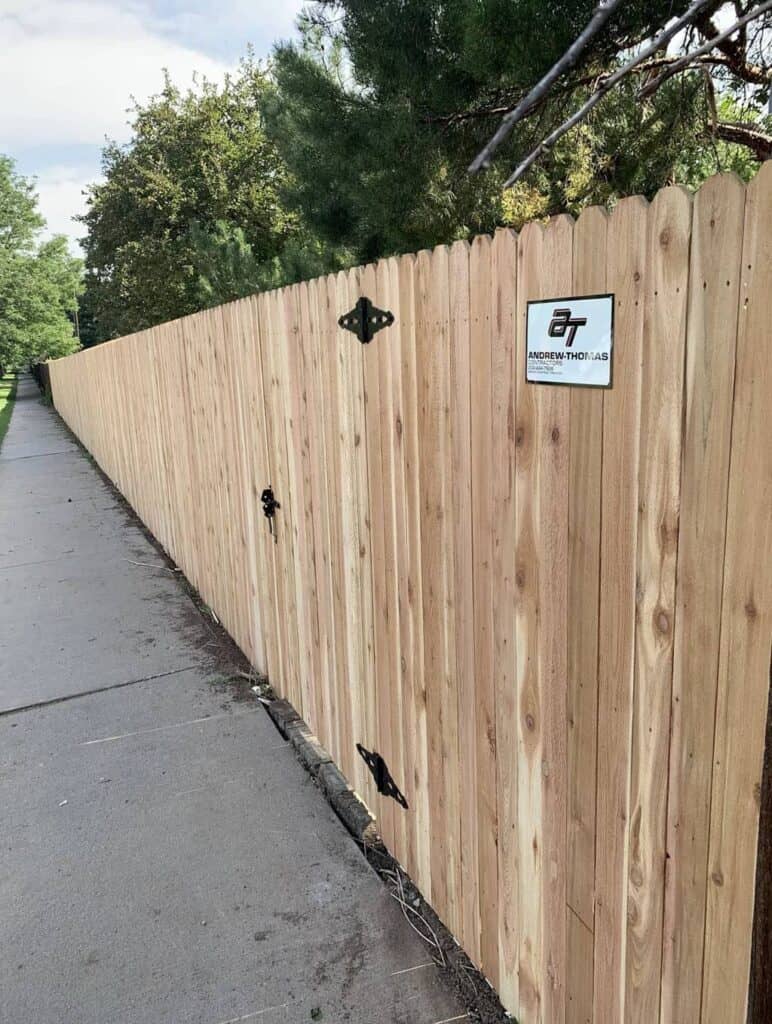
If you are planning a privacy fence in Westminster, you have probably already discovered that most of the advice online is either too generic to be useful or written for a completely different part of the country. Height limits, permit requirements, HOA rules, wind exposure, soil conditions, gate design — these are not abstract considerations here. They are the actual variables that determine whether your fence holds up for decades or needs attention in the first season.
Andrew-Thomas Contractors has been installing and repairing fences across the Denver Metro area since 2006. Every person on our team has personally installed fences in Colorado. What follows is the guidance we give Westminster homeowners every day, grounded in nearly two decades of hands-on local experience.
Why Westminster Homeowners Are Installing Privacy Fences
Demand for privacy fencing is strong across Westminster’s established and growing neighborhoods such as Legacy Ridge, Bradburn, Stratford Lakes, Hyland Greens, and the communities in between. The motivations vary, but they tend to fall into a few consistent categories: homeowners who want a quieter, more private backyard; families and pet owners who need safe and reliable containment; and property owners focused on modern looks and curb appeal.
A well-planned privacy fence delivers all of those things at once. It screens the yard from street and neighbor sightlines, reduces noise from nearby roads, contains children and dogs, and adds real visual value to the property. The challenge is not whether to install, it’s knowing how to plan it correctly for Westminster’s specific conditions. That is what the rest of this article covers.

Westminster Fence Height Rules: What the Code Actually Says
City Height Limits Under Westminster Municipal Code
Westminster’s fence height regulations are governed by the Municipal Code WMC 11-4-6(P). The rules are straightforward, but they catch homeowners off guard when they assume a 6-foot fence is always allowed everywhere on the property.
For most residential lots, the limits are:
- Rear and side yards: 6 feet maximum
- Front yards: 36 inches (Class 2 and 3 fences that are more than 50% open may reach 42 inches)
- Visibility triangles at intersections, driveways, and alleys: 3 feet maximum to maintain safe sightlines
The 6-foot privacy fence is the practical standard for Westminster backyards, and when installed correctly it delivers the screening and containment most homeowners are looking for. If you need a taller fence for noise mitigation along an arterial street, for example, Westminster’s Board of Adjustment handles variance applications, which require documented hardship and a review of potential impact on neighboring properties.
We are familiar with these regulations across Westminster and the broader Denver Metro. We help homeowners understand exactly what is permitted on their specific lot before any planning decisions are made.
Permits: Required for Every Fence in Westminster
This is one of the most common surprises for Westminster homeowners: a building permit is required for all fences in the city, regardless of height, whether the project is a new fence installation, a replacement, or a fence repair. There are no height thresholds that exempt a fence from this requirement.
Permits are applied for through Westminster’s Online Permitting Portal and require a site plan. Standard processing runs 5 to 10 business days. Projects in Planned Unit Developments, floodplains, or those requiring variances may take 2 to 4 weeks due to additional review. Before any digging begins, Colorado law requires that you call 811 to have underground utilities marked. This is not optional, and skipping it creates real risk. Building without a required permit can result in fines, violation notices, mandatory removal or modification, and complications when the property is sold.
Andrew-Thomas Contractors can help instruct on permit coordination as part of our process, so homeowners are not navigating the portal and site plan requirements on their own.
HOA Rules Layer on Top of City Code
Westminster has a high concentration of HOA-governed communities, and this is where homeowners most often run into unexpected friction. Your HOA covenants may impose stricter requirements than city regulations on height, materials, color, and style, and having a city permit does not mean your HOA has approved the project.
The correct sequence is to review your HOA documents first, secure written approval from your HOA before construction begins, and then proceed with the city permit. HOA architectural committee reviews can take 15 to 30 days, so building that lead time into your project timeline matters. Andrew-Thomas Contractors follows homeowner-provided HOA documentation as a standard part of our process and is available to help with questions that come up along the way.

Wind Is the Wildcard in Westminster
What Front Range Wind Actually Does to a Privacy Fence
This is the consideration that most fence contractors do not address, and it is the one that separates a fence built to last from one that becomes a repair project after the first hard season.
Westminster sits along Colorado’s Front Range, where Chinook winds and spring storm systems create some of the most demanding wind conditions for residential fencing in the Denver Metro. A solid 6-foot privacy fence is, by design, a solid surface. In sustained high wind, that surface catches everything. We have seen what happens to panels installed with insufficient post depth or undersized footings when a Chinook comes through. It is not a minor repair. Sections fail, posts shift, and the damage typically traces back to shortcuts taken during installation. Westminster and the communities along the Front Range corridor see higher wind exposure than many areas further east in the metro, and installation standards need to reflect that.
How to Engineer a Privacy Fence for Wind Load
Proper wind-resistant installation comes down to a few non-negotiable standards:
- Post depth: Posts should be set 24 to 30 inches deep in concrete, with gravel added at the base of each hole in Westminster’s clay-heavy soils to improve drainage and prevent shifting over time
- Fasteners: Galvanized or exterior-grade fasteners are required. Colorado’s moisture cycles and temperature swings will work through inferior hardware faster than most homeowners expect
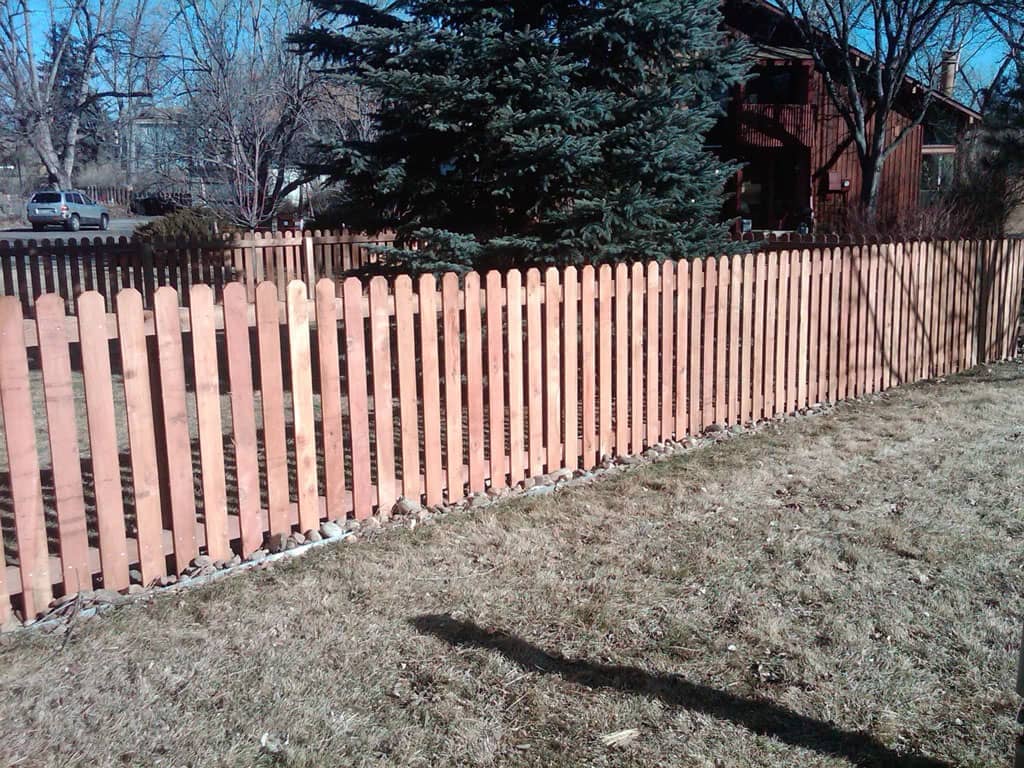
- Panel design: Full privacy panels provide maximum screening but also catch the most wind. Semi-private designs, shadowbox or alternating picket styles, allow air to pass through, reducing wind load while still delivering meaningful privacy
- Post systems: Steel or PostMaster post systems paired with cedar or composite panels are a strong option for high-exposure Westminster yards, combining structural integrity with rot resistance
There are no shortcuts on post depth and footing standards. This is precisely where the difference between a fence that performs for 20 years and one that needs attention in year two is determined.

Material Selection: What Actually Holds Up in Westminster
Not all fencing materials perform equally in Colorado’s climate. UV intensity, wind load, temperature swings, and HOA requirements all factor into the right choice for a Westminster yard. Optimal materials for long-term durability are critical.
Cedar is the most widely used wood privacy fence material in the Denver Metro for good reason. Western red cedar naturally resists decay and insects, is dimensionally stable in dry air, and accepts stain well. With proper construction and regular maintenance, staining every two to three years, a cedar fence can last 15 to 30 years in Colorado conditions. It pairs well with steel or PostMaster posts for added wind resistance in exposed yards.
Vinyl offers low maintenance and strong weather resistance. Vinyl fencing and posts should be reinforced with steel inserts to provide wind stability and prevent warping. Colorado’s UV exposure is significant, and quality vinyl products hold their color and structural integrity noticeably better than budget options.
Composite delivers the look of wood with lower long-term maintenance demands. It performs well against Colorado’s UV intensity and temperature swings and is a strong choice for HOA communities where consistent appearance matters over time.
Ornamental aluminum is durable, low-maintenance, and appropriate for front yards or applications where full privacy is not the primary goal. It holds up well in Colorado’s climate without rusting and is often a practical fit for HOA communities that restrict full privacy panels in certain areas of the property.
Andrew-Thomas Contractors works with all of these materials and recommends based on your specific yard conditions, HOA requirements, and long-term performance goals, not on what is easiest or most convenient to install.

Backyard Planning: What Your Specific Lot Requires
Slope and Grade
Westminster backyards range from flat open lots to notably sloped terrain, and slope directly affects post placement, panel alignment, and gate function. Racked panels follow the grade continuously for a smooth, flowing fence line. Stepped panels drop in level increments, creating a cleaner horizontal profile. The right approach depends on the degree of slope, the material, and the visual result the homeowner wants. Getting this wrong creates visible gaps at the base of the fence line that undermine both aesthetics and containment. We assess grade during the initial consultation so the installation approach is settled before work begins.
Gate Placement and Design
Gate design is one of the most underplanned parts of a fence project, and it is one of the most common sources of post-installation frustration. A sagging or misaligned gate, particularly in homes with heavy use or large dogs, is avoidable when it is planned for correctly from the start. On sloped lots, gates require additional framing and hardware to open and close correctly over time. Self-latching gate mechanisms matter for pet containment and are required by Westminster code for pool fence installations. Steel frame gates are available for homeowners who want to reduce long-term maintenance and avoid recurring repair costs. We treat gate planning as equal in importance to the fence line itself, because the gate is almost always the most-used part of the fence.
Pet Containment Specifics
For homeowners with dogs, the details that matter are gap spacing at the base of the fence, picket spacing throughout the panel, and gate latch height. A fence that appears complete can still have containment gaps if these specifics are not addressed during the design phase. We work through containment requirements with every homeowner who has dogs before the project is finalized.

The Westminster Permit and HOA Process: A Practical Summary
For homeowners who want a clear sequence to follow, here is how the process works:
- Review your HOA documents and identify any fence requirements or restrictions
- Submit a fence design to your HOA architectural committee for written approval (allow 15 to 30 days)
- Apply for a city building permit through Westminster’s Online Permitting Portal with a site plan
- Wait for permit approval (5 to 10 business days for standard projects)
- Call 811 to have underground utilities marked before any digging begins
- Proceed with installation once both approvals are confirmed
Andrew-Thomas Contractors can help advise on permit coordination, and we follow homeowner-provided HOA documentation as a standard part of our process. Homeowners do not need to navigate this alone.

Why Local Expertise Makes a Difference in Westminster
Westminster is not a generic Denver suburb. It has its own zoning code, heavily HOA-governed communities, Front Range wind exposure, and clay-heavy soils that require contractor knowledge that goes beyond a standard install playbook. Big-box and national fence companies frequently lack the Colorado-specific, neighborhood-level experience that distinguishes a fence built to last from one that needs correction in the first season.
Andrew-Thomas Contractors has served the Denver Metro area since 2006. Every team member has personally installed fences in Colorado. That hands-on local knowledge informs every material recommendation, every post-setting standard, and every installation decision we make. No upfront deposit is required, homeowners pay only when the project is completed to their satisfaction. We back our work with a one-year warranty on workmanship and materials, we are available year-round including winter installations, and we are a BBB-accredited business with a track record built over nearly two decades in this market.
Ready to Plan Your Westminster Privacy Fence?
If you are researching privacy fence options in Westminster, the next step is a free estimate and consultation. We will walk you through your yard conditions, fence heights, permitting and HOA requirements, material options, and the full project process. No pressure and no deposit is required until the work is done to your satisfaction.
Contact Andrew-Thomas Contractors for a free estimate today, and visit our Westminster Fence Installation and Repair page to learn more.