

- Written by Kyle Fletcher
- Published on August 25, 2026

If you’re watching your wood fence weather and wondering whether consistent care can genuinely push it toward the 20-year mark, that’s a question worth asking before the damage gets ahead of you. Wheat Ridge fences face a set of climate pressures that most home improvement guides don’t address honestly, and the difference between a fence that lasts and one that doesn’t usually comes down to a maintenance approach built around Colorado’s actual conditions. At Andrew-Thomas Contractors, we’ve been installing and repairing fences across Wheat Ridge and the broader Denver Metro since 2006, and this guide covers what we’ve learned from working in these conditions year after year.
A 20-year lifespan is achievable. It’s not automatic, and it won’t happen if you treat a Colorado fence the same way you’d treat one in a more temperate climate. What follows is the honest, field-tested guidance we share with our own customers.
The Short Answer: How Long Do Wood Fences Last in Wheat Ridge?
A well-installed cedar wood fence in Wheat Ridge can realistically last 15 to 20 years with consistent maintenance. Neglect the upkeep and that same fence can deteriorate in as little as 5 to 7 years. Installation quality is the first variable, because a fence set improperly at the post level will fail structurally no matter how well you maintain the surface. Ongoing care is the second variable, and it has to be calibrated to Colorado’s climate, not national averages.

Why Wheat Ridge Is Harder on Wood Fences Than Most Places
Intense UV Exposure
Colorado’s elevation accelerates UV damage in a way that surprises homeowners who moved here from lower-elevation states. At Front Range elevations, solar radiation is more intense than at sea level, and unprotected wood fiber breaks down faster than most product labels account for. You’ll see graying and surface cracking appear sooner than you’d expect if you’re used to fence maintenance timelines from other parts of the country.Freeze-Thaw Cycles
Winter in Wheat Ridge doesn’t just get cold and stay cold. Temperatures swing repeatedly across the freezing point, and soil that freezes and thaws multiple times through a single season puts constant pressure on post footings. That movement loosens posts over time, and a post that heaves even slightly creates structural problems that surface maintenance can’t fix. This is the failure mode we see most often in fences that were installed without adequate post depth or concrete backfill.Moisture Cycling
Colorado is dry much of the year, but spring snowmelt, concentrated rain events, and irrigation overspray create periods of significant moisture exposure. Wood that cycles repeatedly between wet and dry states stresses along the grain, and that cycling affects how well stains and sealants adhere over time. A finish applied at the wrong moisture content, or over wood that hasn’t dried fully after spring, won’t last as long as the same product applied correctly.Front Range Wind
Wind on the Front Range puts lateral stress on fence panels, rails, and connections throughout the year. After a significant wind event, hardware loosens, boards can warp, and entire panel sections shift. These aren’t dramatic failures on their own, but left unaddressed after each season, they compound into structural problems. We see this across Wheat Ridge, Arvada, and the surrounding communities we serve regularly.
Your Annual Wood Fence Maintenance Schedule for Colorado
A calendar built around Colorado’s actual seasonal patterns will keep you ahead of the damage. Here’s how we break it down:
Spring Maintenance
- This is your most important maintenance window.
- Once freeze-thaw season winds down, walk the full fence line and inspect every post for movement by pushing firmly in multiple directions.
- Look for boards that show soft spots near ground contact, hardware that has worked loose over winter, and any sections that shifted during frost heave.
- Clean the fence with an appropriate wood cleaner to remove mildew, algae, and the weathered finish layer that UV has degraded since your last application.
Summer Maintenance
- The months after your fence has dried fully from spring moisture are your best window for staining or sealing.
- Don’t rush this. Wood that’s still holding moisture from snowmelt won’t accept a finish properly, and you’ll end up with peeling or poor penetration.
- Clear any vegetation growing against the fence base, since plants trap moisture against the wood.
- Check for boards that have cupped or warped from early-season heat cycles and address those before applying finish.
Fall Maintenance
- Remove any debris, soil buildup, or mulch that has accumulated against the fence base over the growing season.
- Check caulking and gaps at gate posts, where wood movement from summer heat tends to open up space for water entry.
- Do a final hardware check before temperatures drop.
- This pass takes an hour, but it sets you up to go into winter without known vulnerabilities.
Winter Maintenance
- Most homeowners assume fence work stops in winter. It doesn’t have to. We’re available year-round, including winter months, for professional inspection and repair.
- If you notice a post leaning or a section shifting after a heavy snow, that’s worth addressing before spring freeze-thaw cycles make it worse.
- Clearing heavy snow piled against fence panels is a simple step that reduces prolonged moisture exposure at pickets and posts.
How Often to Stain or Seal a Cedar Fence in Colorado
Most national guides suggest restaining every 3 to 5 years. In Colorado’s UV environment, plan for every 2 to 3 years instead. The elevated solar radiation at Front Range elevations degrades surface finishes faster than those manufacturer timelines assume, and waiting for visible deterioration means you’re already behind.
A simple field check: pour a small amount of water on the fence surface. If it beads up, your finish still has life in it. If it soaks in, the protection is gone and you’re past due. Penetrating oil-based stains tend to perform well in Colorado’s dry conditions because they flex with the wood as temperatures swing rather than sitting on the surface and cracking. Surface preparation matters as much as product choice. Applying stain over dirty or weathered wood produces poor adhesion and shortens the protection window considerably, which is why spring cleaning has to come before any finish application.
Checking Posts and Footings: The Most Important Step Most Homeowners Skip
Your fence’s surface can look fine while the posts underneath are failing. Post integrity is the structural foundation of the entire system, and freeze-thaw soil movement is the primary reason posts fail in Wheat Ridge. Check every post by pushing it firmly from multiple angles and watching the base for movement. Even a small amount of wobble is a warning sign.
Posts that were set too shallow or without adequate concrete backfill at installation are the most common reason fences fail structurally before their time. No amount of staining or board replacement will fix a fence built on that foundation. When we install a fence, we don’t take shortcuts at the post-setting stage, because that’s where the 20-year lifespan is either won or lost. If you’re dealing with an older fence that a previous contractor installed and you’re seeing leaning or movement, that’s the conversation to have with us before you spend more on surface maintenance.
For more detail on post care through Colorado winters, our article on maintaining your wood fence through Colorado’s harsh winters goes deeper on this topic.
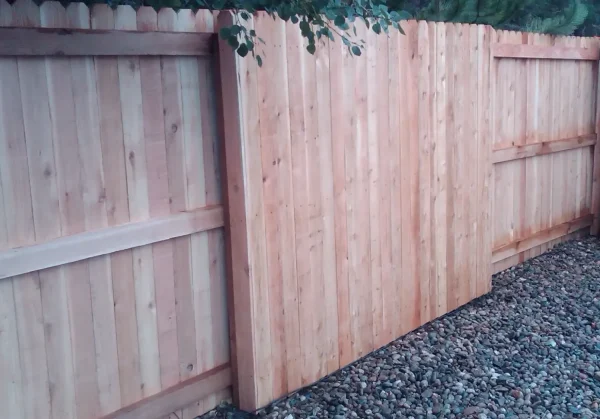
Early Warning Signs Your Wood Fence Needs More Than Maintenance
There’s a difference between a fence that needs its annual attention and one that has crossed into professional repair territory. Knowing which situation you’re in saves you from spending money on surface maintenance that won’t solve the real problem.
- Soft or spongy boards near ground level: Press your thumb firmly into the wood at the base of pickets and lower rails. If the wood gives or feels spongy, rot has penetrated the fiber. Stain won’t reverse that, and those boards need to be replaced before the decay spreads to adjacent sections.
- Posts that move when pushed: Any post movement, even slight, indicates the footing has been compromised. This is a structural issue, not a cosmetic one.
- Deep checking across multiple boards: Surface checking (small cracks) is normal weathering. Checking that runs deep into the board and affects multiple sections indicates the wood has dried past the point where a finish can restore meaningful protection.
- Mildew that returns quickly after cleaning: Persistent black staining or mildew that comes back within weeks of cleaning often points to a drainage problem, shading condition, or moisture source that surface treatment won’t address.
- Gate sag that has worsened over one season: Gates that have gotten progressively harder to open and close typically signal a post or hardware problem, not just normal settling.
If any of these signs sound familiar, contact us for a free, no-pressure fence inspection. We’ll give you honest guidance on whether your fence needs maintenance, repair, or replacement. Our fence repair service page also covers what that process looks like in more detail.
The Wheat Ridge Fence Maintenance Checklist (Print or Save This)
This checklist is designed to be saved, printed, or shared in your neighborhood group. Run through it once a year, ideally in spring after freeze-thaw season ends.
Cleaning
- Wash the full fence with an appropriate wood cleaner.
- Remove mildew, algae, and weathered finish buildup.
- Rinse thoroughly and allow wood to dry fully before applying any finish.
Structural Inspection
- Push every post in multiple directions and check for movement or wobble.
- Check for posts that lean visibly or have shifted since last season.
- Inspect rails for sagging, warping, or separation from posts.
Finish Condition
- Run the water bead test: pour water on the surface and watch whether it beads or soaks in.
- Look for peeling, flaking, or deep graying across board faces.
- Plan to restain or reseal if the finish is depleted (every 2 to 3 years in Colorado).
Hardware and Gates
- Tighten all screws and bolts that have worked loose.
- Replace any fasteners that are visibly rusted or corroded.
- Check gate hinges, latch hardware, and self-closing mechanisms for proper function.
- Confirm gate posts haven’t moved or settled since last season.
Ground Contact and Drainage
- Clear soil, mulch, and vegetation from the fence base.
- Redirect sprinkler heads that regularly soak the fence.
- Look for low spots near the fence line where water pools after rain or snowmelt.
This checklist has been developed from Andrew-Thomas Contractors’ field experience across Wheat Ridge and the Denver Metro. If any item reveals damage beyond routine maintenance, we offer free estimates with no deposit required. Visit our fence repair services page for more details.
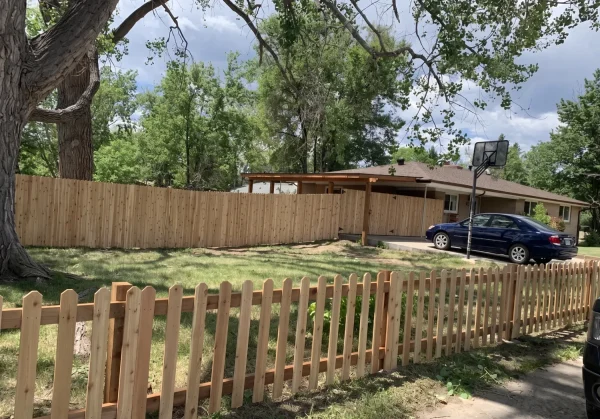
When Maintenance Stops Making Sense: Repair vs. Replacement in Wheat Ridge
Honest advice here: not every aging fence is worth the ongoing cost of maintenance. At some point, continued spending on a fence that’s failing structurally delivers diminishing returns, and the more economical decision is a planned replacement on your timeline rather than a forced one after a failure.
The factors we weigh in that conversation include the age of the fence relative to its realistic lifespan, whether structural damage is isolated to one post or spread across multiple sections, what percentage of boards show rot versus normal surface weathering, and whether a replacement would need to meet current city requirements under Wheat Ridge Code Section 26-603, which sets a 6-foot maximum height for side and rear yard fences and a 4-foot maximum for front yards. If your current fence predates those height limits or doesn’t conform to them, a replacement is an opportunity to bring everything into compliance at once.
We’ll always give you both options and our honest read on which one makes more financial sense for your situation. Because we don’t collect a deposit and final payment is only due when the project meets your expectations, there’s no financial pressure pushing us toward one recommendation over the other.
If you’re starting to think a repair or full replacement may be the next step, our Wheat Ridge fence installation service page walks through what that process looks like with us.
What to Expect When You Call a Wheat Ridge Fencing Company for a Repair or Estimate
When a maintenance issue escalates to the point where you want a professional opinion, here’s what working with us looks like. Our process has four steps: Initial Consultation, Approval and Scheduling, Installation, and Service and Maintenance. That fourth step is the one most fencing companies skip entirely, and it’s the one that matters most for long-term performance.
Initial Consultation
During the initial consultation: We look at your fence the way a technician would, not a salesperson. We’re checking post integrity, finish condition, hardware, drainage, and structural stability. If repairs are needed, we give you a clear scope before any work is scheduled.
Approval and Scheduling
In the approval and scheduling phase: We confirm the plan with you digitally and work around your schedule. We also offer a rush service when timing is important, with fees discussed upfront.
Installation
When repairs are done: We use the same materials wherever possible to match your existing fence. That matters for visual consistency and for HOA compliance in neighborhoods with design standards. Every project carries a one-year warranty on workmanship and materials. We’re also a BBB-accredited business, which you can verify independently before you call.
Service and Maintenance
After the work is done, we don’t disappear. We’re available year-round, including winter months, for follow-up inspections and any warranty concerns. Every project carries a one-year warranty on workmanship and materials, so if something isn’t right, you have a clear path back to us. We also offer free estimates with no deposit required, so there’s no financial commitment until the project meets your expectations.
If you’ve been burned before by a contractor who collected a deposit and underdelivered, that policy is a real difference, not marketing language. Before calling anyone for a repair estimate, it’s worth reading our article on how to choose a Wheat Ridge fencing company so you know what questions to ask.

Final Thoughts: Your Wheat Ridge Fence Can Last 20 Years With the Right Approach
The 20-year mark is real, but it requires two things working together: a fence that was installed correctly at the foundation, and a maintenance routine calibrated to Colorado’s actual climate rather than generic advice. UV intensity at elevation, freeze-thaw pressure on post footings, moisture cycling, and Front Range wind are the specific conditions your fence is dealing with every year.
Some fences will eventually reach the point where professional repair or full replacement is the honest next step. When that conversation comes up, we’ll give you a clear assessment of both options without any financial pressure. We don’t require a deposit, and we stand behind every project with a one-year workmanship and materials warranty.
Owner and CEO Kyle Fletcher started in this trade in high school through a family fencing business, and Andrew-Thomas Contractors has been serving Wheat Ridge and the Denver Metro since 2006. Everyone on the team has personally installed fences in Colorado, which means the guidance in this article comes from field experience, not a manual.
Get a free estimate from Andrew-Thomas Contractors today. We serve Wheat Ridge year-round, including winter. For more on caring for your wood fence, our article on fence maintenance tips and our wood fencing services page have additional detail.
When you’re ready to talk through your fence’s condition, contact us or visit our Wheat Ridge fence installation service page to learn more about working with us.
Frequently Asked Questions About Wood Fence Maintenance in Wheat Ridge
How often should I stain my wood fence in Colorado?
Plan to restain every 2 to 3 years in Colorado. The UV intensity at Front Range elevation degrades surface finishes faster than the 3-to-5-year timelines you’ll see in national product guides. Use the water bead test as your field check: if water soaks into the surface rather than beading, the finish is depleted and it’s time to reapply.
What type of stain works best for Colorado wood fences?
Penetrating oil-based stains tend to perform well in Colorado’s dry conditions because they flex through the wood rather than sitting on the surface, which matters when temperatures swing significantly between seasons. Look for products with UV inhibitors and water repellents built in.
Can I repair my wood fence in the winter in Wheat Ridge?
Yes. We’re available year-round, including winter months, for both professional repair and new installation. Many homeowners don’t realize fence work can proceed in winter. If you notice a leaning post or damaged section after a snow event, getting it assessed before spring freeze-thaw cycles worsen the heaving is often the better call than waiting until the ground thaws.
How do I know if my fence post needs to be replaced?
Push the post firmly from multiple directions and watch the base for any movement. A post that wobbles, leans visibly, or shows cracking at ground level has likely lost its footing integrity. Surface wobble that appeared gradually over one or two winters typically means the concrete backfill has failed or the post was set too shallow at installation.
Does Wheat Ridge require a permit to replace a fence?
Permits aren’t generally required for fences up to 6 feet tall in Wheat Ridge, but your fence still needs to meet the height and placement requirements under Wheat Ridge Code Section 26-603: 6 feet maximum for side and rear yards, 4 feet maximum for front yards. Pool enclosures and fences in floodplains have different requirements. Check with the city’s Building Division before starting replacement work.
What is the lifespan of a wood fence in Wheat Ridge?
A well-installed cedar fence with consistent maintenance can realistically reach 15 to 20 years in Wheat Ridge’s Front Range conditions. A neglected fence, or one that was improperly installed at the post level, can deteriorate in 5 to 7 years. Installation quality and ongoing care both matter, and the two work together more than most homeowners account for when planning a fence investment.

Written by Kyle Fletcher
Kyle Fletcher is the owner and CEO of Andrew‑Thomas Contractors, serving the Denver metro. In fencing since high school, he launched the company in 2006 and oversees estimating, scheduling, and quality checks on residential, commercial, and HOA projects. His team specializes in fence installation and repair, driveway gates, hand rails, and safety bollards, delivering work at or above industry standards. Clients know Kyle for clear communication and clean job sites—habits reflected in the firm’s A+ BBB rating and consistently strong Google reviews.
