
- Written by Kyle Fletcher
- Published on August 3, 2026
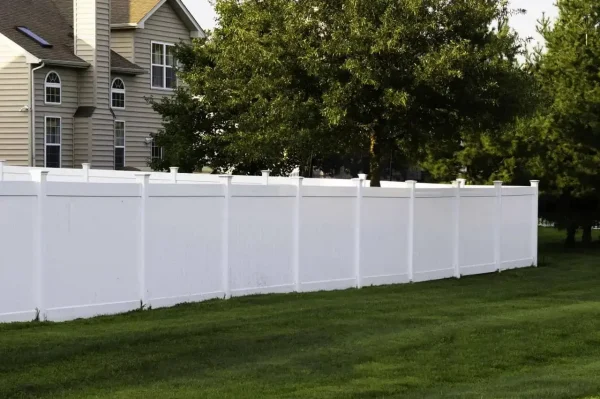
That gate that won’t close the way it used to. The post that has shifted a few degrees overnight, leaving a gap at the base where concrete used to sit flush with the soil. If you’ve owned a fence in the Denver Metro area for more than a few winters, you’ve likely seen it. Colorado’s freeze-thaw cycles, clay-heavy soils, and high-altitude UV don’t give fences much of a break, and most generic maintenance guides don’t account for any of it. This guide from Andrew-Thomas Contractors covers Colorado-specific, field-tested maintenance practices that will extend the life of your fence, whatever material it’s made of and wherever you’re in the Denver Metro area.

Why Denver’s Climate Is Hard on Fences (And What That Means for Maintenance)
Denver’s combination of climate stressors doesn’t have a good parallel in most of the country, and generic maintenance guides don’t account for it. Here’s what we actually see in the field.
Freeze-Thaw Cycles
Freeze-thaw cycles are the biggest structural threat. Our soils in the Denver Metro area have a significant clay content, and clay expands when wet and contracts when it dries. When that cycle happens repeatedly through a Colorado winter, it pushes fence posts up and sideways. Posts set too shallow are especially vulnerable, but even well-set posts see movement over time.
High-altitude UV Exposure
High-altitude UV exposure is something most homeowners underestimate. Denver sits at 5,280 feet with roughly 300 sunny days per year. At that elevation, UV radiation degrades wood finishes faster, fades vinyl more quickly, and accelerates rust on metal fences in ways that don’t happen the same way at lower elevations. A wood fence in Denver needs sealing attention on a shorter schedule than one installed somewhere on the coast.
Heavy Wet Spring Snow
Heavy wet spring snow adds load that lighter, drier winter snow doesn’t. Colorado’s spring storms can dump dense, wet snow that sits on horizontal rails and panel tops for days, stressing rail connections and post footings. Hail is a direct impact problem: Denver is squarely in the hail belt, and a good hailstorm can crack vinyl panels, dent chain link, and chip paint from wrought iron in a single afternoon. High Front Range winds round it out by stressing post connections and gate hardware over time.
Watching what these specific conditions do to different materials, different post depths, and different hardware choices over years is what informs the guidance in this article.
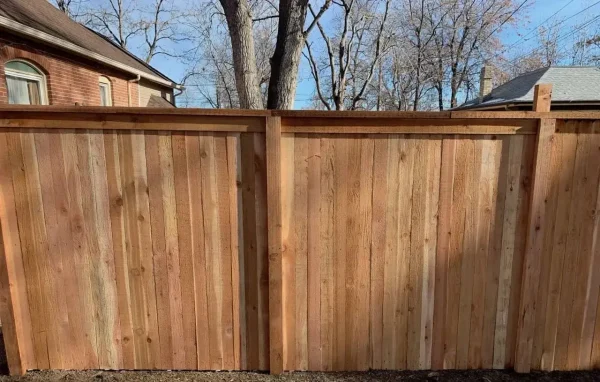
A Seasonal Fence Maintenance Schedule for Denver Homeowners
Denver’s seasons don’t run cleanly by the calendar. We get late spring snowstorms and early fall freezes that catch homeowners off-guard, so the framework below is based on conditions rather than months. Think of it as a reference you come back to each season, adjusting for what Colorado’s weather is actually doing.
Spring: Post-Winter Inspection and Damage Assessment
Spring is your most important maintenance window. Walk your entire fence line and work through these checks specifically.
- Start at ground level on every post. Place a level against the face and check for vertical plumb. Look for gaps that have opened between the post base and the concrete footing, which indicates the post has moved. Push lightly on each post to test for wobble that wasn’t there last year.
- Open and close every gate. Check hinges for rust, loosening screws, or misalignment that developed over winter. A gate that drags or doesn’t latch cleanly is usually the first sign of freeze-thaw movement in the posts. For wood fences, probe the base of each picket with a screwdriver. If the tip sinks in easily, the wood is rotting. Check vinyl panels for hairline cracks near post connections and rail inserts, which is where cold-weather stress concentrates. Inspect chain link and wrought iron for new rust spots or paint chips that appeared over winter.
- Clear any mulch, dead vegetation, or debris that built up against the fence base over the winter. Organic material traps moisture and accelerates rot and rust at the post bases, where both are most damaging.
Spring is also the right time to plan sealing or staining for wood fences, before summer UV intensity peaks. If your spring walk-through turns up leaning posts, cracked concrete footings, or hardware that can’t be adjusted back into alignment, that’s the point to bring in a professional. Request your free estimate and we’ll walk you through everything we find. We’re available seven days a week from 7 am to 8 pm, so there’s no need to wait out the season. Get in touch through our Denver fence repair page.
Summer: Sealing, Staining, and UV Protection
Summer is the primary maintenance window for wood fences. The days are long, the UV is intense, and getting sealant or stain on before the worst heat cycles hit is the right call.
- For wood fences, the general rule is resealing every 1 to 3 years, but south-facing and west-facing fence runs in Denver need attention more often because they take the most afternoon sun. The water bead test tells you whether it’s time: splash some water on the wood. If it soaks in rather than beading, the surface protection is gone and the wood is absorbing moisture and UV without a barrier. Before applying any stain or sealant, clean the surface thoroughly, do light sanding where the finish is rough or flaking, and let the wood dry completely. A stain applied over a damp surface won’t bond correctly.
- Check your HOA guidelines before you re-stain or repaint. Many Denver Metro communities have approved color palettes and finish requirements for fences, and applying the wrong color can result in a violation notice. We’re familiar with what’s standard across the communities we serve and can advise if you’re unsure.
- Vinyl and chain link fencing requires minimal summer attention. Vinyl can be cleaned with mild soap and water; avoid pressure washing at close range, which can force water into panel seams. Wrought iron should be inspected for paint chips in summer, when it’s warm enough for rust-inhibiting primer and touch-up paint to bond correctly. Don’t leave bare metal exposed heading into fall.
Fall: Pre-Winter Prep and Hardware Checks
Fall is about protecting what you’ve maintained through the year so it survives Colorado’s winter intact.
- Clear all vegetation away from the fence base. Vines, tall grass, and dead plant material hold moisture against wood and accelerate rot. This is especially worth noting for dog owners whose pets push vegetation into the fence line throughout summer. Check every fence board for loose fasteners and address them before snow adds weight to the panel.
- Lubricate all gate hinges, latches, and any other moving hardware with a weatherproof lubricant. Cold temperatures thicken standard lubricants, and hardware that works fine in October can seize in January. Confirm every gate latch closes completely and holds. A gate that freezes open overnight is not a minor inconvenience if the fence is the primary containment for children or dogs. This pre-winter check is one we consider non-negotiable.
- Inspect post caps on wood and vinyl fences. A missing or cracked cap lets water into the post core, where it freezes, expands, and accelerates damage from the inside out. Replacing a cap in October costs very little compared to what freeze-thaw damage to an unprotected post core can require in repairs.
Winter: Snow Management and What Not to Do
Winter maintenance is mostly about what to avoid.
- Don’t pile shoveled snow against your fence. The weight and prolonged moisture contact will bow panels or rails and accelerate rot at wood post bases. Use a plastic shovel or a soft broom for clearing snow near fence panels, particularly with vinyl, which is more brittle in extreme cold. A metal shovel edge scraping against vinyl panels can crack them.
- If you use rock salt or ice melt products near the fence line, rinse the fence base when temperatures allow. Salt splashes onto metal hardware and chain link and speeds up corrosion. After any significant hail or wind event in winter, do a visual inspection for dislodged panels, cracked vinyl, or newly leaning posts. Address structural issues before additional snow loads them further.
At Andrew-Thomas Contractors, we operate year-round, including through Denver winters, seven days a week from 7 am to 8 pm. Homeowners don’t have to wait until spring to schedule an inspection or repair if they identify a problem. Many fencing companies in Denver don’t take winter service calls, but we do.
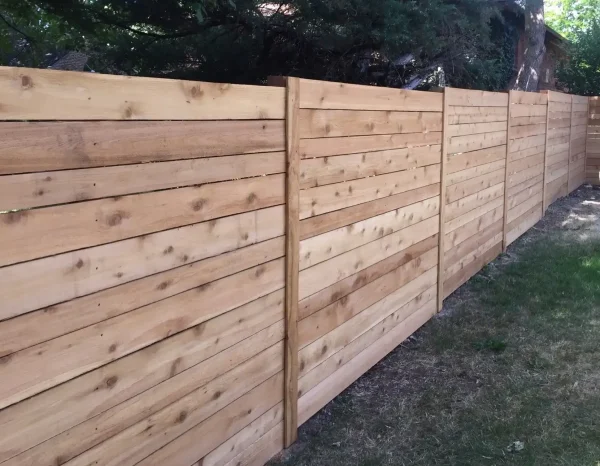
Material-by-Material Maintenance Guide for Denver Fences
The right maintenance approach depends on what your fence is made of. We install and repair wood, vinyl, chain link, and wrought iron fences throughout the Denver Metro area. Each material has different vulnerabilities in Colorado’s climate, and the sections below cover what actually matters for each.
Wood Fence Maintenance in Colorado
Wood is the most maintenance-intensive fence material in Denver’s climate. UV degrades surface finish faster at altitude, and freeze-thaw cycles put repeated stress on post bases and fasteners. An annual inspection is the baseline: check every post for vertical plumb, probe the base of each picket for soft spots with a screwdriver, and look at the rails for warping or cracking.
New wood should be sealed within the first year. After that, the schedule is every 1 to 3 years depending on exposure, with more frequent attention on south and west-facing runs. The highest rot risk point on any wood fence is where wood meets or approaches soil. Confirm that your lowest rail and pickets are not sitting in direct contact with soil or mulch. Colorado’s clay soils retain moisture longer than sandy or loam-based soils, which means post bases and bottom rails stay wet well after a rain or snowmelt event.
Cedar and redwood perform significantly better in Denver’s climate than pine because of their natural resistance to moisture and insects. We recommend and install wood species that hold up in Colorado conditions. Our article on maintaining your wood fence through Colorado’s harsh winters goes deeper on the cold-weather side of wood care.
More information on wood fencing installation and repair work can be found on our wood fencing page.
Vinyl Fence Maintenance in Colorado
Vinyl is genuinely low-maintenance compared to wood, but it’s not zero-maintenance in Denver. UV exposure causes fading and surface oxidation over time, and cold temperatures make vinyl brittle and more prone to cracking from impact. Cleaning twice a year with mild soap and water removes dirt, algae, and UV residue. Keep the pressure washer at a reasonable distance and avoid hot water, which can distort the material.
After a harsh winter or hail event, inspect all panels carefully for hairline cracks, particularly near post connections and rail inserts. That’s where cold-weather stress concentrates and where cracks start. One thing worth knowing about vinyl: color fading can’t be reversed. If a panel becomes severely discolored, replacement is the only fix, which is a strong reason to stay on top of cleaning and reduce UV accumulation. Hardware on vinyl fences still needs the same lubrication schedule as any other fence type.
More information on vinyl fencing installation and repair work can be found on our vinyl fencing page.
Chain Link Fence Maintenance in Denver
Properly coated chain link is one of the more durable fence materials in Colorado’s climate. Galvanized and vinyl-coated chain link resists rust far better than uncoated steel, but it still requires regular inspection. Check the mesh, posts, and hardware annually for rust spots. Address early rust with rust-inhibiting paint or coating before the corrosion has a chance to spread, because once chain link rusts through, the repair becomes more involved.
Tension wire and tie wire can loosen from ground movement and wind stress over time. A sagging chain link line creates gaps, which is both a security concern and a pet containment problem. Re-tensioning is a straightforward repair that shouldn’t be deferred. Check post caps and rail end caps each year since missing caps allow water into hollow posts and start internal rust that you won’t see until it’s advanced.
Our chain link fencing page covers installation options and material choices in more detail.
Wrought Iron Fence Maintenance in Colorado
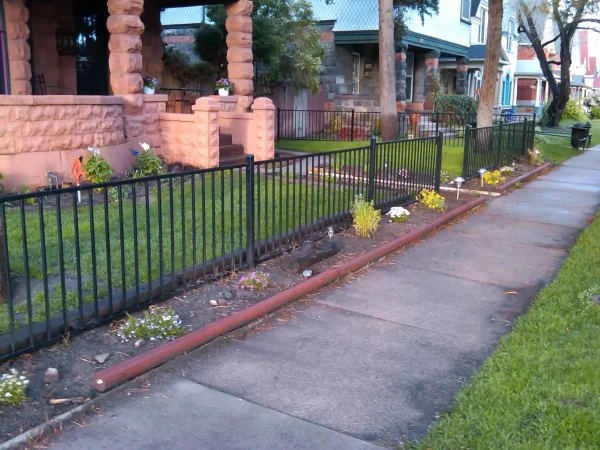
Wrought iron will last a very long time when maintained correctly, but it requires active rust prevention. Denver’s combination of moisture, UV, and temperature swings is genuinely hard on any unprotected metal surface. Annual inspection should look specifically for paint chips, bubbling paint (which means rust is forming beneath the surface before it breaks through), and surface rust at weld points and ground contact areas.
Address chips and scratches immediately with rust-inhibiting primer and a matched paint coat. Don’t leave bare metal sitting exposed heading into fall or winter. If you’re repainting wrought iron, check with your HOA first. Many communities have specific requirements for color and finish on iron fencing, and it’s much easier to verify before you buy paint than to repaint after a violation notice. Hinges, latches, and decorative hardware need the same lubrication schedule as metal components on any other fence type.
Installed wrought iron with proper powder coating or paint will significantly outlast budget-installed iron with inferior coatings. More details on our installation and repair standards can be found on our wrought iron fencing page.
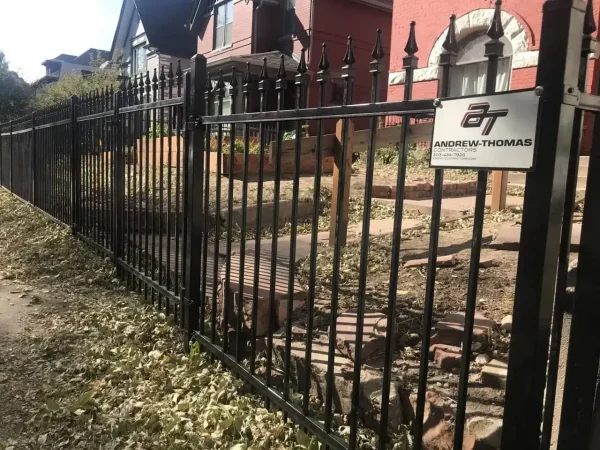
Gate and Hardware Maintenance: The Part Most Homeowners Overlook
Gates take more mechanical stress than any other part of the fence. They open and close hundreds of times a year, bearing weight on hinges set in posts that are themselves subject to ground movement. Gate maintenance should be treated as its own task, not an afterthought to the annual fence inspection.
Checking Gate Sag and Alignment
- Gate sag is the most common failure pattern we see in Denver. Freeze-thaw cycles shift post alignment through the winter, which causes hinges to pull loose and gates to drag or fail to latch. Inspect gate alignment every spring and every fall. It doesn’t take long to open and close the gate a few times and check whether it tracks cleanly and latches without force.
Latch Integrity and Lubrication
- Latch integrity is a safety issue, not just a convenience issue. A latch that doesn’t close fully or that can be pushed open by a determined dog or a curious child is a real problem. We build dogs ourselves, and we know from direct experience that a gate that “usually” latches is not the same as one that reliably latches. Check every latch before winter. Lubricate all hinges and latches with weatherproof lubricant twice a year: before winter and again in spring. If a gate has self-closing hinges, common on pool gates and yard gates where containment matters, check the spring tension periodically. That tension fatigues over time and eventually stops doing its job without any obvious visible sign.
Picket Spacing for Pet Owners
- For dog owners, there’s one more check worth doing each year: confirm that the picket spacing on gate panels hasn’t widened due to panel shifting. A gap that was fine when the fence was new can open up as posts settle over time. If gate hardware failure can’t be corrected through lubrication and adjustment, that’s the point for a professional evaluation. Reach out through our Denver fence repair page and we’ll take a look.
Warning Signs: When Fence Maintenance Becomes a Repair Job
Some things on a fence can be handled by a homeowner with basic tools. Others signal that the fence has moved from maintenance territory into repair territory, and trying to manage them with surface treatments is a delay, not a fix.
- Posts leaning more than a few degrees off vertical indicate footing failure or severe ground heaving driven by freeze-thaw cycles in Denver’s clay-heavy soils. A post in this condition will continue to shift and eventually pull connected panels out of alignment. Correcting it means replacing the footing. Cracked or heaved concrete footings are visible at the post base, when the footing has cracked or risen out of the ground, it’s no longer doing its job and the post it supports isn’t stable.
- Widespread wood rot at multiple post bases or along rail sections can’t be addressed with spot treatment or sealant. Once structural wood has rotted through, the affected sections need replacement. Sagging or racking fence panels, where the fence run is no longer plumb or level, indicate post or rail failure, not just a surface problem. A gate that can’t be adjusted to close and latch properly after multiple hardware adjustments is a sign that the post has moved beyond what hardware correction can compensate for.
- On metal fences, rust that has penetrated through to the core rather than sitting on the surface isn’t addressed by paint touch-up. Hail or storm damage that affects structural integrity needs professional assessment, not a season of watching to see if it gets worse.
Catching these issues early, before a fence section fails completely, typically makes the repair less involved. If you’re seeing any of these signs, request your free estimate and we’ll walk you through what we find. There’s no deposit required, and you can reach us through our Contact Page. Our Denver fence repair guide also covers common repair scenarios in more detail, and we back our installations with a one-year warranty on workmanship and materials.
What 18 Years of Denver Fence Installations Taught Us About Longevity
Andrew-Thomas Contractors has been in the fencing business since 2006, and there are patterns you only see after doing this work in one place for a long time.
Post Depth
- The single biggest cause of premature fence failure in Denver is posts set too shallow. Posts that don’t go below the frost line will heave every winter, working against the footing until it cracks. In the Denver Metro area, that frost line runs deeper than many contractors account for. Our installations go deeper to prevent this, and it’s one of the first things we check when we’re called out on a failing fence.
Hardware Quality
- Hardware quality matters more than most homeowners realize when they’re comparing bids. Cheap hinges and latches fail faster than the fence panels they’re attached to, which is frustrating because the panels look fine but the gate doesn’t work. We use corrosion-resistant hardware on every installation, not as a premium add-on, but because it’s what the climate here requires.
Drainage
- Drainage at the fence base is consistently overlooked. Yards that slope toward the fence line or that have irrigation heads aimed at the fence base create conditions where post bases stay wet. Saturated soil accelerates both rot in wood and frost heave in any material, and we factor drainage into our installation planning.
The fences we’ve seen last the longest in Denver aren’t always the ones with the highest initial cost. They’re the ones built correctly from the start: right post depth, proper concrete, corrosion-resistant fasteners, and materials that actually perform in Colorado conditions. That’s what we mean by Fences Built to Last. Our four-step process and our post-installation service commitment both exist because we want the fence to hold up long after the installation crew has left. We’re a BBB Accredited business, and that accountability extends through every stage of the project.
Keep Your Fence in Good Shape, and Call Andrew-Thomas Contractors When You Need Backup
Consistent seasonal attention, material-specific care, and catching warning signs early will significantly extend the life of a Denver fence. Denver’s climate does more to fences than most parts of the country, and the maintenance requirements here are genuinely different from generic national guidance.
We’re available seven days a week from 7 am to 8 pm, and we work year-round, so there’s no wrong time to call if you’ve found something that needs attention. There’s no deposit required to get started, and we stand behind our work with a one-year warranty on workmanship and materials. If you’ve spotted a maintenance issue that has moved into repair territory, or if your fence is aging and you’re starting to think about replacement, request your free estimate today and we’ll walk you through everything. Reach us through our Contact Page.
If you’re researching a new fence installation in the Denver Metro area, our Denver fence installation page covers materials, process, and what to expect. Fences built to last start with the right installation, and that’s what we’ve focused on since day one.
Frequently Asked Questions About Denver Fence Maintenance
How often should I seal or stain a wood fence in Denver?
Every 1 to 3 years, depending on sun exposure and wood species. South-facing and west-facing fence runs need more frequent attention because of Denver’s intense afternoon UV. The water bead test is the simplest way to check: if water soaks into the wood rather than beading on the surface, it’s time to reseal.
What causes fence posts to lean or heave in Denver?
Freeze-thaw cycles expand and contract the clay-heavy soils common in the Denver Metro area, pushing posts up and sideways over time. Posts set too shallow, above the frost line depth, are the most vulnerable. A post set correctly in properly mixed concrete will still see some movement over many years, but not the kind of dramatic heaving that short-set posts experience.
Does vinyl fencing need maintenance in Colorado?
Less than wood, but it isn’t maintenance-free here. Vinyl should be cleaned twice a year, and after harsh winters or hail events, panels should be inspected for hairline cracks, especially near post connections and rail inserts where cold-weather stress concentrates.
How do I know if my fence needs repair vs. replacement?
Isolated damage, one or two boards, a single post, a gate hinge, usually points to repair. Widespread rot across multiple posts, several leaning sections, or structural rail failure across a long run often means the fence has reached the end of its useful life. We’re straightforward about this when we come out for an assessment.
Can fence maintenance be done in winter in Denver?
Some tasks, including lubrication, visual inspection, and hardware checks, can be done year-round. We also take service calls year-round, seven days a week from 7 am to 8 pm, so you don’t have to wait until spring if you spot a problem in January.
Should I check with my HOA before re-staining or painting my fence?
Yes. Many Denver Metro HOAs have approved color palettes and finish requirements for fences. Checking first is much simpler than repainting after a compliance notice.

Written by Kyle Fletcher
Kyle Fletcher is the owner and CEO of Andrew‑Thomas Contractors, serving the Denver metro. In fencing since high school, he launched the company in 2006 and oversees estimating, scheduling, and quality checks on residential, commercial, and HOA projects. His team specializes in fence installation and repair, driveway gates, hand rails, and safety bollards, delivering work at or above industry standards. Clients know Kyle for clear communication and clean job sites—habits reflected in the firm’s A+ BBB rating and consistently strong Google reviews.